





30-Minute Walk with Weighted Vest Calories Burned
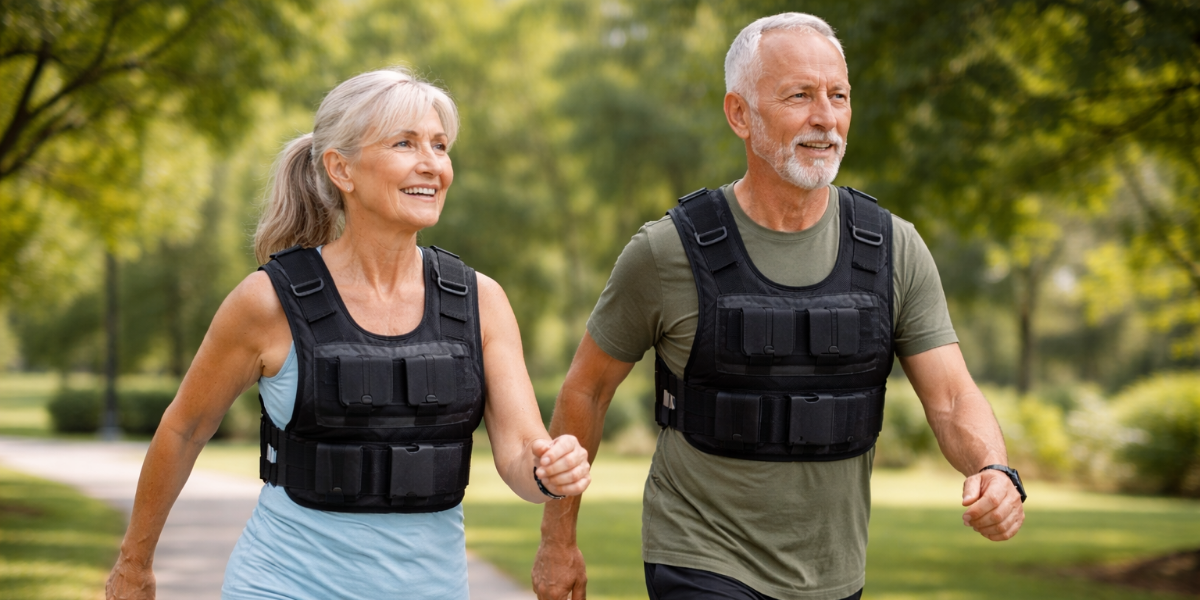
Table of Contents
If you’ve been scrolling through fitness social media lately, you’ve probably noticed everyone talking about weighted vest walking and walking pad workouts. And for good reason—these simple additions to your routine can dramatically increase calorie burn without requiring a gym membership or complicated equipment. But here’s what everyone wants to know: exactly how many calories does a 30-minute walk with a weighted vest actually burn?
Let me break it down for you in a way that makes sense, whether you’re a complete beginner or someone who’s been walking for years.
Understanding Weighted Vest Walking and Calorie Burn
Walking with a weighted vest isn’t just a trendy workout—it’s a legitimate way to amplify the benefits of something you’re already doing. When you add extra weight to your body, your muscles work harder, your heart rate increases, and yes, you burn significantly more calories.
For a typical adult weighing around 150 pounds, a regular 30-minute walk at a moderate pace (about 3.5 mph) burns approximately 140-150 calories. Now, add a weighted vest that’s 10-20% of your body weight, and you’re looking at burning an additional 15-30% more calories. That means your 30-minute walk could burn anywhere from 160 to 195 calories or more.
30-Minute Walk with Weighted Vest Calories Burned Female
Women often wonder if the calorie burn differs for them specifically. The answer is it depends on several factors, including your current weight, the vest weight you’re using, your walking speed, and your fitness level. Generally speaking, a woman weighing 140 pounds using a 15-pound weighted vest during a 30-minute brisk walk can expect to burn approximately 170-200 calories.
The beauty of walking pad workouts with a weighted vest is that you can do them right in your living room while watching TV or taking a work call. This makes it incredibly sustainable compared to workouts that require you to get in the car and drive to a gym.
Using a Rucking Calorie Calculator for Accurate Results
Before we go further, let’s clarify something: rucking and weighted vest walking are cousins in the fitness world. Rucking typically refers to walking with a loaded backpack (originally a military training method), while weighted vest walking distributes the weight more evenly across your torso.
A rucking calorie calculator takes into account:
- Your body weight
- The weight you’re carrying
- Your walking speed
- The duration of your walk
- Terrain difficulty (flat vs. inclined)
The formula these calculators use is more complex than regular walking because they factor in the additional metabolic cost of carrying extra weight. While I can’t embed a live calculator here, you can find excellent free rucking calorie calculators online that will give you personalized numbers based on your specific situation.
Weighted Vest Walking Calories Calculator: How to Estimate Your Burn
Want to do some quick math yourself? Here’s a simplified weighted vest walking calories calculator approach:
Basic formula:
- Calculate your regular walking calories (roughly 3-4 calories per minute for moderate walking)
- Multiply by the percentage of body weight you’re adding
- Add that to your base calorie burn
Example: If you’re a 160-pound person wearing a 20-pound vest (12.5% of body weight):
- Base 30-minute walk: ~120 calories
- Additional burn from vest: ~15-20% more = 18-24 calories
- Total: approximately 138-144 calories
Keep in mind this is simplified. Walking pad workouts on an incline or at higher speeds will increase these numbers significantly.
Calories Burned Rucking vs Walking: What’s the Real Difference?
This is where things get interesting. When comparing calories burned rucking vs walking without weight, studies show that rucking can increase calorie expenditure by 30-50% depending on the weight carried and walking speed.
Here’s a practical comparison:
- Regular walking (3.5 mph, 30 minutes): 140-160 calories
- Rucking with 20-30 lbs (3.5 mph, 30 minutes): 185-240 calories
- Weighted vest walking on incline: 200-280 calories
The distributed weight of a vest tends to be more comfortable for longer walks, while rucking with a backpack engages your core and back muscles differently. Both are excellent for building strength while doing cardio.
Walking with Weighted Vest Before and After 30 Days: Real Results
So what actually happens when you commit to this? I’ve seen countless transformations, and the results are honestly impressive for such a simple modification to your routine.
After 30 days of consistent weighted vest walking (4-5 times per week for 30 minutes), people typically report:
Physical changes:
- Loss of 3-6 pounds (when combined with proper nutrition)
- Improved leg and core muscle definition
- Better posture and stability
- Increased bone density (the weighted vest creates positive stress on bones)
Performance improvements:
- Ability to walk faster with the vest
- Increased endurance for regular walks
- Better cardiovascular fitness
- Enhanced balance and coordination
I Wore a Weighted Vest for a Month: My Personal Experience
I tested this myself because I wanted to see if the hype was real. I wore a 15-pound weighted vest during my morning walking pad workouts for an entire month, five days a week, 30 minutes per session.
Week 1: It felt awkward and heavy. My shoulders needed time to adjust, and I was definitely breathing harder than usual.
Week 2: My body started adapting. The vest felt less cumbersome, and I could maintain my regular pace more easily.
Week 3: This is when I noticed real changes. My regular walks without the vest felt effortless, like I was floating. My legs looked more toned.
Week 4: I increased my walking speed because the vest didn’t feel as challenging anymore. My posture improved dramatically, and I’d lost 4 pounds without changing my diet.
The key takeaway? Consistency beats intensity. A moderate 30-minute weighted vest walk done regularly will beat an occasional intense workout every time.
Maximizing Your Walking Pad Workouts with a Weighted Vest
If you’re using a walking pad (those compact treadmills perfect for home use), adding a weighted vest takes your workout to another level. Here are my top tips:
Start light: Begin with 5-10% of your body weight and gradually increase. Your joints need time to adapt.
Focus on posture: Keep your shoulders back and core engaged, and avoid leaning forward. The vest should feel balanced.
Vary your routine: Mix flat walks with incline intervals, or alternate between steady-state and speed bursts.
Stay consistent: Aim for 3-5 sessions per week rather than daily to allow recovery.
Listen to your body: If you feel joint pain (not muscle soreness), reduce the weight or take a rest day.
Safety Considerations and Best Practices
Before you strap on that weighted vest, keep these guidelines in mind:
- Consult your doctor if you have any joint issues, especially in your knees, hips, or back
- Never exceed 20% of your body weight when starting out
- Invest in a quality vest that distributes weight evenly
- Wear proper walking shoes with good cushioning and support
- Stay hydrated—weighted walking increases sweat loss
- Build up gradually; don’t jump from zero to 30 minutes immediately
FAQs
How many calories does a 30-minute walk with a weighted vest burn?
A 30-minute walk with a weighted vest typically burns 160-240 calories, depending on your body weight, vest weight (usually 10-20% of body weight), and walking speed. This represents approximately 15-50% more calories than walking without a vest.
Is walking with a weighted vest better than regular walking?
Walking with a weighted vest burns more calories, builds more muscle, and strengthens bones better than regular walking. However, it also places more stress on joints, so it’s not suitable for everyone. For most people, combining both types of walking creates an ideal balanced routine.
How heavy should my weighted vest be for walking?
Beginners should start with 5-10% of their body weight, while experienced walkers can use 10-20%. For example, if you weigh 150 pounds, start with a 7-15 pound vest and gradually increase. Never exceed 20% of your body weight to avoid injury.
Can I use a weighted vest on a walking pad every day?
While possible, it’s better to allow rest days for recovery. Aim for 3-5 sessions per week to give your muscles and joints time to adapt. You can do regular walking on off days to maintain consistency without overloading your body.
What’s the difference between rucking and weighted vest walking?
Rucking uses a loaded backpack, which engages back and core muscles differently and allows you to carry more weight. Weighted vest walking distributes weight evenly across your torso, typically feels more comfortable for longer durations, and is easier to maintain proper form with.
Will walking with a weighted vest help me lose belly fat?
Weighted vest walking increases overall calorie burn, which contributes to total body fat loss (including belly fat) when combined with a caloric deficit. However, you cannot spot-reduce fat from specific areas. Consistent weighted walking, paired with proper nutrition, will lead to gradual fat loss throughout your body.

Faisal is the founder and content creator of The Workout Haven, a fitness and wellness blog focused on home workouts, weight loss, strength training, yoga, and healthy lifestyle habits. He creates easy-to-follow, beginner-friendly fitness guides backed by research, practical experience, and real-world application. Faisal’s goal is to help people stay active, build strength, and improve overall health—no gym or expensive equipment required.