

5 Exercises Seniors Need 60 over do this
Table of Contents
Introduction
Did you know there are five simple exercises you can do every day that can help you move like you’re 20 years younger? These moves improve strength, balance, mobility, and fitness. And you can do them all at home with no equipment needed. Hi, I’m Foysal. I’ve worked with hundreds of people over 60 to build strength, fitness, mobility, and confidence programs.

Why do we get weaker as we age?
As we get older, our bodies naturally lose muscle, a process called sarcopenia. It starts at around the age of 30 and accelerates as we get older, especially if we spend long periods sitting and not using our muscles enough. That loss of strength makes everyday activities like standing up from a chair, climbing stairs, or carrying groceries feel harder than they used to. But the good news is you’re never too late to rebuild that strength. With a few consistent functional movements, you can restore muscle, boost balance, and move with the confidence you had years ago.
Let’s go through :
The five simple exercises that will help you do exactly that:
- sit-to-stand
- calf raises
- wall press-ups
- the overhead press
- Step back lunge
Number one
the sit-to-stand. You’re going to start seated on a sturdy chair with your feet hip-width apart and your arms crossed over your chest. Push through your feet, stand up tall, then slowly sit back down under control. This move looks simple, but it’s one of the most effective things you can do for lower-body strength. It targets your thighs, glutes, and core. The muscles that help you get up and down from a chair or a sofa. When these muscles are strong, standing becomes easier, and you can move with much more stability. Think of this one as training for independence. Do about 10 slow repetitions.
Exercise number two
is calf raises. We’re going to stand tall with your feet about hip-width apart. And if you need to hold a wall or a chair for support, lift your heels so you’re standing up on your toes. Pause for a second and lower back down slowly. You’ll feel this in your calves and ankles, the muscles that support every step you take. Stronger calves help absorb impact, making walking feel lighter and improving ankle stability, which is key for balance and preventing falls. If you’ve ever felt unsteady on uneven ground, this exercise directly helps with that. Aim for 10 controlled repetitions.
Exercise three
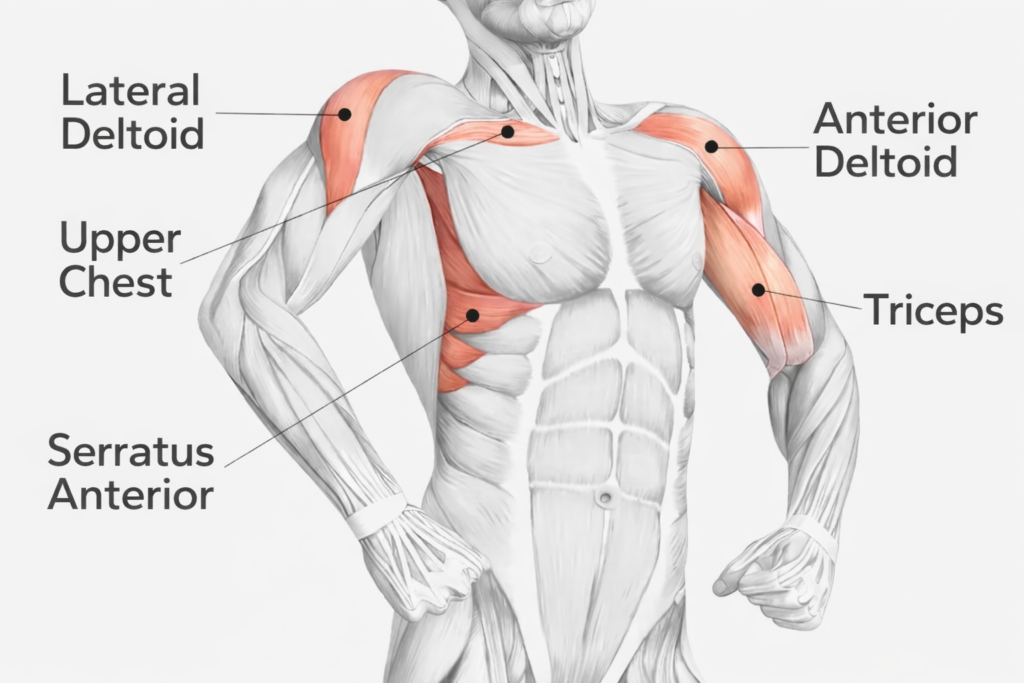
wall press-ups. Stand at arm’s length from a wall and place your hands flat at shoulder height. Bend your elbows and bring your chest gently towards the wall, keeping your body straight. Then push back down to the start. This builds strength in your chest, shoulders, and triceps, the pushing muscles we use every day. It helps with actions like getting up from the floor, pushing open heavy doors, or supporting yourself as you stand. You’ll also feel your core working a little to keep your body aligned. Try 10 repetitions, keeping the movement slow and steady.
Exercise four
is the overhead press. Stand or sit upright, holding light weights or two water bottles. Bring your hands to shoulder height and push them overhead until your arms are straight. Then lower them back down slowly. This one works your shoulders, upper back, and arms. Muscles that are vital for posture and everyday lifting. It trains the exact movement you use when putting shopping away in a cupboard or lifting something onto a shelf. Over time, you’ll notice better shoulder mobility and less stiffness in your upper back. Do 10 repetitions, keeping your movements smooth and controlled.
Exercise five
Step back lunge. Stand tall and take a step back with one leg, bending both knees slightly. Push through your front foot to return to standing. Then switch legs. If you need a little extra support, hold a chair or a wall for balance. Lunges strengthen your thighs, glutes, and core. And they also train your balance and coordination. They mimic movements like climbing stairs or getting up from the floor. The kind of strength that truly improves your day-to-day life. Even small steps make a big difference here.
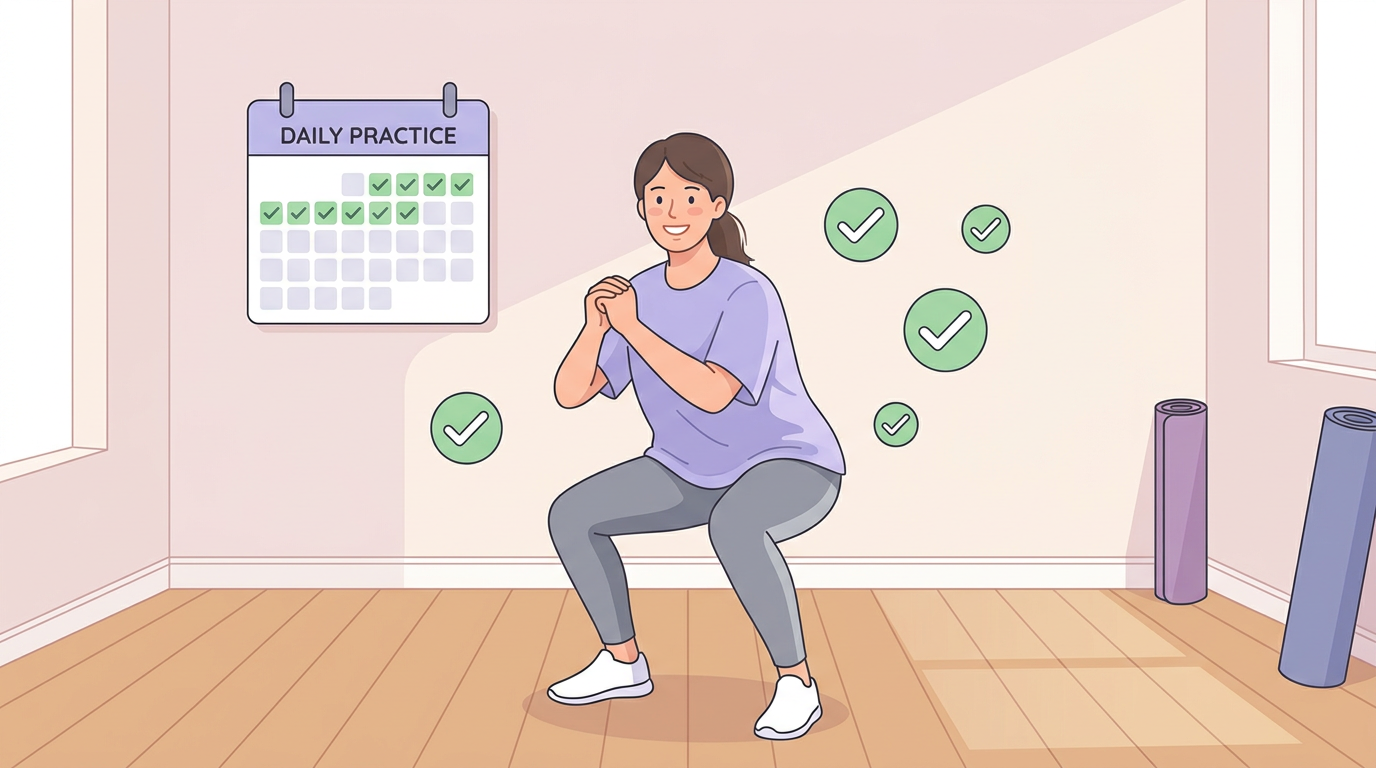
Do five lunges on each leg. Now, let’s put the five together into one daily routine. We’re going to do 10 sit-to-stands, 10 calf raises, 10 wall press-ups, 10 overhead presses, and five lunges on each leg. You’re going to rest for about 30 seconds, and then you’re going to repeat that circuit two to three times.
That’s it. 5 to 10 minutes a day to rebuild strength, improve balance, and move with confidence. As you get stronger, you can increase the repetitions or add light weights. The goal isn’t perfection, it’s progress. These movements use the same muscles you rely on for daily life. So, the benefits build quickly. You’ll stand taller, walk steadier, and feel stronger doing the things you love. If you’d like this exact workout routine, follow along with me at home.
Frequently Asked Questions (FAQ)
Q: How many times a week should I do this routine?
A: For the best results, consistency is key. I recommend performing these five movements at least 3 to 4 times a week. However, because these are low-impact “functional” movements, many of my students at Elder Fit find they feel best when they do them every single morning to “wake up” their muscles and joints. Listen to your body—if you feel very sore, take a rest day.
Q: What if I have “bad knees” or arthritis?
A: This is a very common concern! The goal of these exercises is actually to support your joints by strengthening the muscles around them. If a movement like the lunge feels sharp or painful, reduce the “range of motion.” Instead of a deep step, just take a tiny step back. As your strength improves, the pressure on your joints often decreases, leading to less daily pain.
: Is it ever “too late” to start at age 80 or 85?
A: Absolutely not. Research has shown that even people in their 90s can increase their muscle mass and bone density through resistance training. Your body is incredibly adaptive. Whether you are 75 or 95, the biological “machinery” to build strength is still there—it just needs a gentle nudge to get started.
Q: Do I need to buy weights or gym shoes?
A: You don’t need a gym to get fit. For the Overhead Press, you can use two full water bottles or even two cans of soup from your pantry. For the other moves, your own body weight is plenty! As for footwear, I recommend wearing a sturdy pair of sneakers with good grip to prevent slipping, especially during the calf raises and lunges.
Q: How long will it take before I feel a difference?
A: Most people report feeling “steadier” on their feet within just two weeks of consistent practice. Significant muscle growth (reversal of sarcopenia) typically takes about 6 to 8 weeks of regular exercise. Remember: you aren’t just training for “big muscles”; you are training for a better quality of life.
Q: What should I do if I feel dizzy during the exercises?
A: Safety is your number one priority. If you feel dizzy, stop immediately and sit down. Ensure you are breathing out during the “hard” part of the move (like standing up) and breathing in as you lower down. Holding your breath can cause your blood pressure to spike. Also, be sure to have a glass of water before starting.
Summary Checklist for Your Daily Routine
To make this easy to remember, here is your Daily 10-Minute Roadmap:
- 10 Sit-to-Stands (Builds Leg Power)
- 10 Calf Raises (Builds Balance)
- 10 Wall Press-Ups (Builds Upper Body)
- 10 Overhead Presses (Builds Mobility)
- 10 Step-Back Lunges (5 per leg for Stability)
- Repeat the circuit 2–3 times.
Faisal is the founder and content creator of The Workout Haven, a fitness and wellness blog focused on home workouts, weight loss, strength training, yoga, and healthy lifestyle habits. He creates easy-to-follow, beginner-friendly fitness guides backed by research, practical experience, and real-world application. Faisal’s goal is to help people stay active, build strength, and improve overall health—no gym or expensive equipment required.