
Gymnastics Home Workout for Beginners | Full Guideline
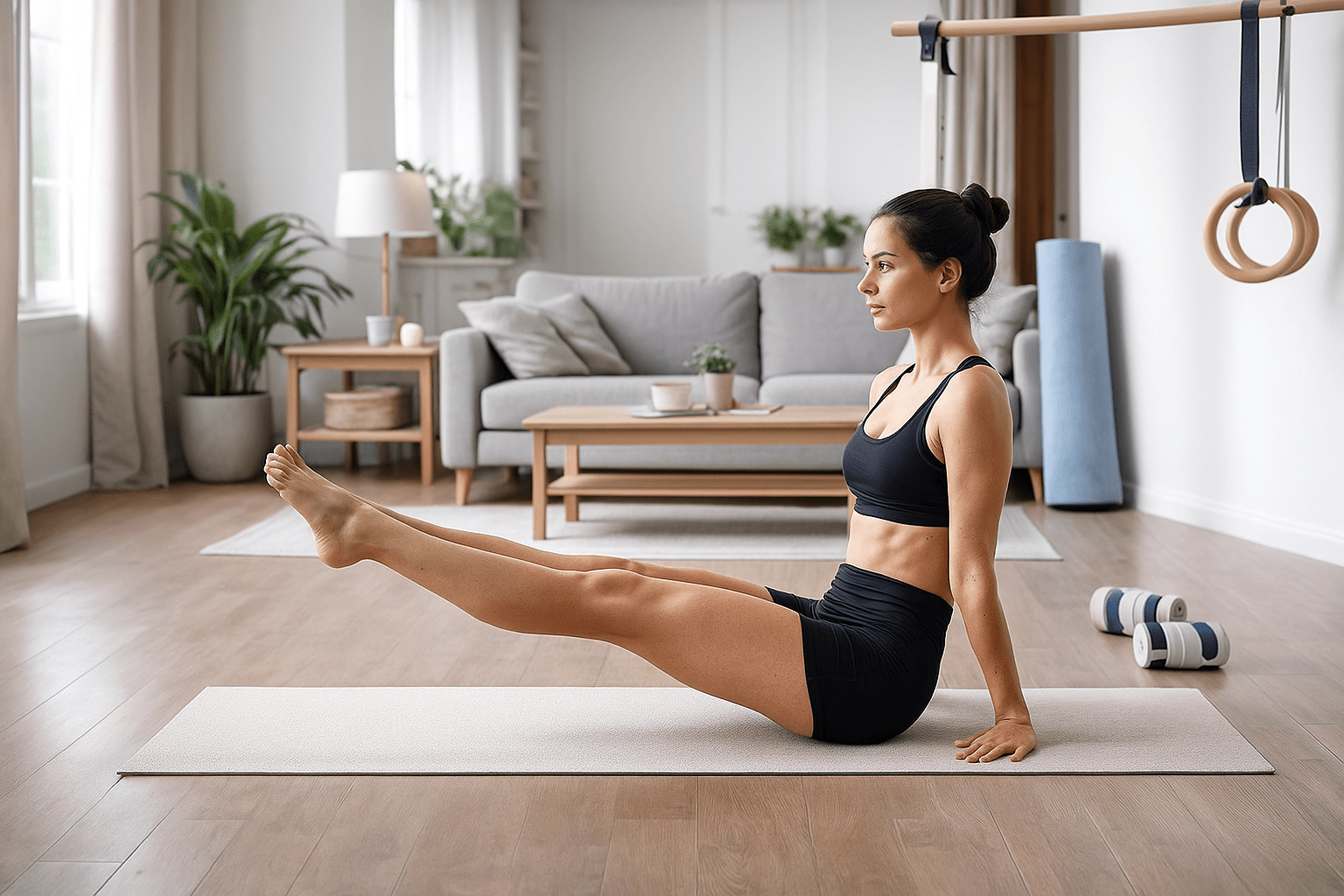
Table of Contents
Gymnastics Home Workout for Beginners | Full Guideline
Starting a gymnastics workout doesn’t mean you need access to a professional gym or expensive equipment. With the right approach, you can begin your gymnastics home journey right in your living room. Whether you’re completely new to fitness or looking to add some athletic variety to your routine, gymnastics exercises for beginners offer a unique blend of strength, flexibility, and body control that few other workouts can match.
Why Start a Gymnastics Home Workout?
Gymnastics training at home without equipment is one of the most accessible forms of fitness available. Unlike other sports-specific training like baseball workouts at home or wrestling at-home workouts, gymnastics uses your body weight as the primary resistance tool. This makes it perfect for anyone wanting to build functional strength without investing in gear.
The beauty of a gymnastics workout lies in its comprehensive approach. You’re not just building muscle—you’re developing balance, coordination, spatial awareness, and mental focus all at once. These foundational skills translate beautifully into other fitness activities, whether you’re eventually interested in Hyrox workouts at home or any other athletic pursuit.
Essential Gymnastics Exercises for Beginners
Building Your Foundation
Before attempting any advanced movements, you need to establish a solid base. Think of your body as the equipment—you need to learn how it moves and responds first.
Body Positioning Basics
Start by mastering the hollow body position. Lie on your back, press your lower back into the floor, and lift your shoulders and legs slightly off the ground. Your body should form a gentle curve, like a rocking chair. Hold this for 10-20 seconds at a time. This single position is the foundation for nearly every gymnastics movement you’ll ever do.
The arched body position is equally important. Flip onto your stomach and lift your chest and legs simultaneously while keeping your arms extended in front of you. These two positions—hollow and arch—teach you the core tension necessary for all gymnastics work.
Gymnastics Home Workout: No Equipment Essentials
The Perfect Push-Up
Yes, push-ups are gymnastics training. But we’re talking about perfect push-ups. Your body should remain in that hollow position throughout the movement. Lower yourself until your chest nearly touches the floor, keeping your elbows at about 45 degrees from your body. Aim for 3 sets of 5-10 reps with perfect form rather than rushing through 30 sloppy ones.
Wall Handstand Holds
Fear of going upside down is natural, but the wall is your friend here. Start by placing your hands about six inches from a wall, then walk your feet up until your body is inverted. Your goal is simply to hold this position, focusing on pushing through your shoulders and keeping your core tight. Begin with 10-second holds and gradually increase your time.
L-Sit Progressions
Sit on the floor with your legs extended in front of you. Place your hands on the floor beside your hips and push down, trying to lift your entire body off the ground. If you can’t lift yourself yet, that’s fine—the act of pushing down hard is already building the strength you need. Work up to holding yourself elevated for 10-20 seconds.
Bridge Holds for Flexibility
Lie on your back, plant your feet near your glutes, and place your palms beside your head with fingers pointing toward your shoulders. Push up into a full backbend. If this feels too intense, start with a simpler bridge on your shoulders and gradually work toward the full extension. Hold for 15-30 seconds.
Creating Your Gymnastics Home Workout Routine
Structure matters when you’re training without a coach. Here’s a simple framework you can follow three times per week:
Warm-Up (5-10 minutes)
- Joint rotations (wrists, ankles, shoulders)
- Light cardio like jumping jacks
- Dynamic stretching, including arm circles and leg swings
Skill Work (15-20 minutes)
- Handstand practice against wall: 3-5 sets of maximum hold time
- L-sit or L-sit progressions: 5 sets of max hold
- The hollow and arch body holds 3 sets of 30 seconds each
Strength Building (15-20 minutes)
- Push-ups: 4 sets of 5-10 reps
- Pike push-ups (for shoulder strength): 3 sets of 8 reps
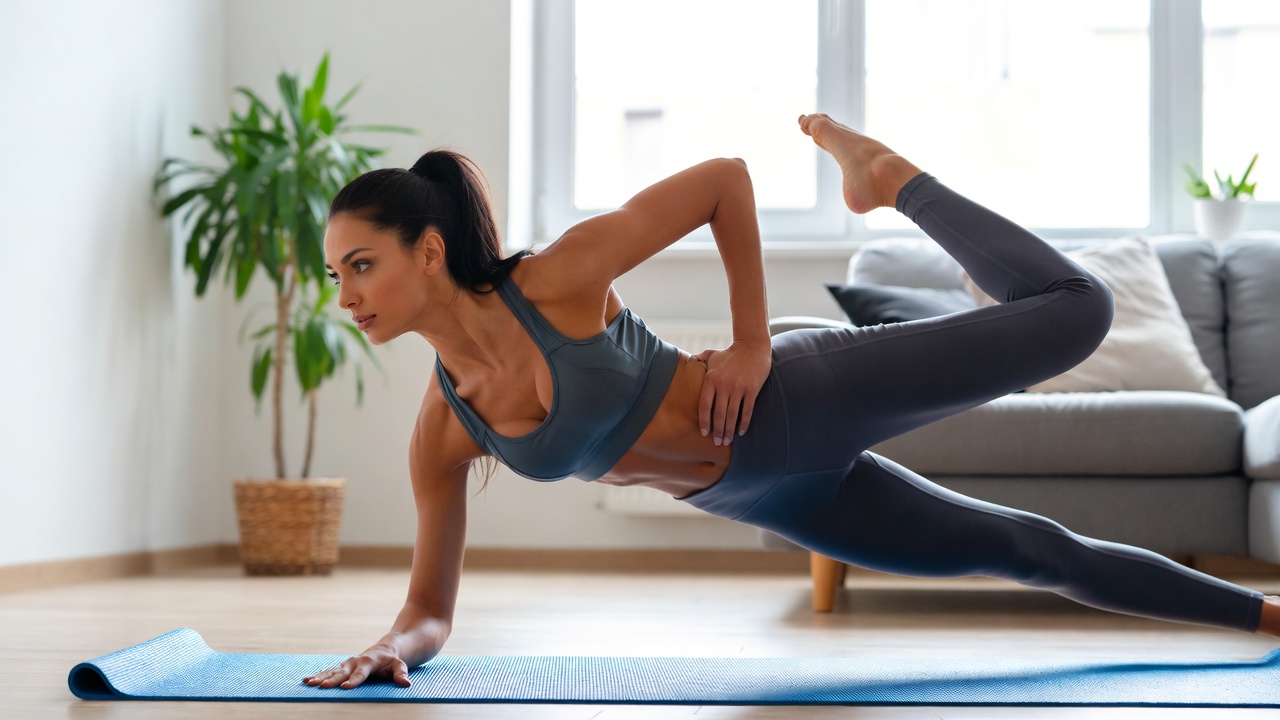
- Plank variations: 3 sets of 30-45 seconds
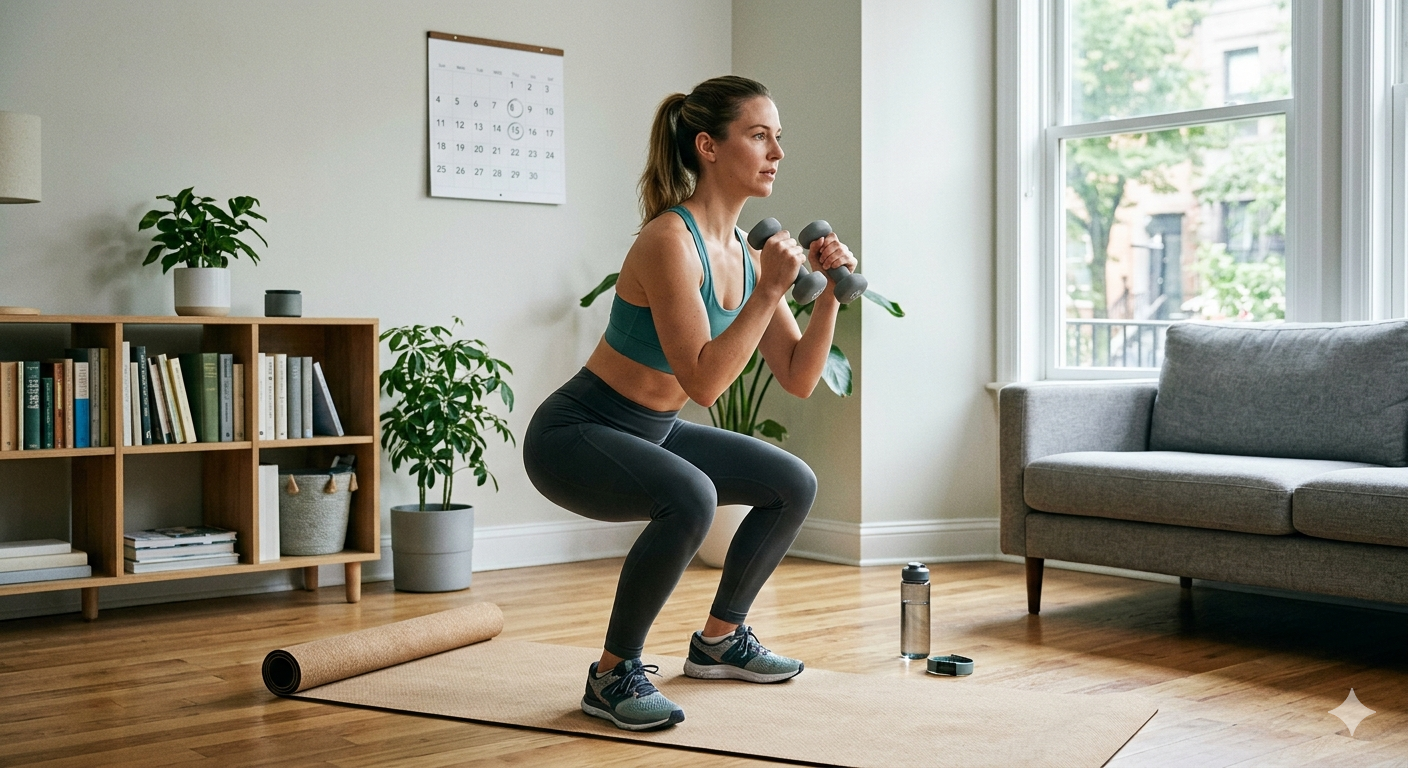
- Squats: 3 sets of 15 reps
Flexibility and Cool Down (10-15 minutes)
- Bridge holds: 3 sets of 20 seconds
- Pike stretch (sitting with legs extended, reaching for toes)
- Straddle stretch
- Shoulder flexibility work
Gymnastics Training at Home Without Equipment: Common Mistakes to Avoid
Rushing Progress
Gymnastics requires patience. You can’t force a handstand or a backbend in a week. Your connective tissues, tendons, and nervous system need time to adapt. Progress in small increments rather than attempting advanced skills too soon.
Neglecting Wrist Preparation
Your wrists aren’t used to bearing body weight. Before every session, spend 2-3 minutes doing wrist circles, flexion and extension stretches, and bearing weight on your hands in various positions. This simple habit prevents countless injuries.
Training Through Pain
Discomfort from effort is normal. Sharp pain or joint pain is not. If something hurts beyond normal muscle fatigue, stop and reassess your form or take a rest day.
Skipping the Basics
Everyone wants to do impressive skills, but those who master the foundational movements progress faster in the long run. A perfect hollow body hold is more valuable than a sloppy handstand.
Progressing Your Gymnastics Workout
After 4-6 weeks of consistent training, you’ll notice significant improvements. Your handstand holds will get longer, your L-sit will become easier, and your bridges will deepen. At this point, you can begin adding progressions:
- Wall walks leading away from handstand support
- Negative handstand push-ups (lowering from handstand to headstand position)
- V-sit progressions from your L-sit
- One-arm push-up progressions
- Freestanding handstand attempts in open space
The key is adding one new challenge at a time while maintaining your foundational work.
Tracking Your Progress
Keep a simple training journal noting:
- How long you held each position
- How many reps you completed with good form
- How you felt during the workout
- Any new achievements or breakthroughs
This isn’t about obsessing over numbers—it’s about recognizing progress that might otherwise feel invisible day to day.
Beyond Gymnastics: Cross-Training Benefits
The strength and body awareness you build through gymnastics home workout routines transfer remarkably well to other fitness pursuits. If you’re interested in functional fitness challenges like Hyrox workouts at home, the core stability and shoulder strength from gymnastics will serve you well. Athletes doing baseball workouts at home will find improved rotational power and shoulder mobility. Those practicing wrestling at home workouts will benefit from the body control and balance gymnastics develops.
Internal Linking Suggestions
Consider linking to related content on your site:
- “Essential Equipment for Home Workouts” (if you have a post on minimal equipment options)
- “Building a Home Gym on a Budget” (complementary to no-equipment training)
- “Bodyweight Training Guide” (broader category that includes gymnastics)
- “Flexibility Training for Athletes” (related to the stretching component)
- “Core Strength Exercises” (gymnastics is excellent core training)
Frequently Asked Questions
Can I really learn gymnastics at home without a coach?
Absolutely. While a coach provides valuable feedback, beginners can safely learn foundational gymnastics movements at home. Focus on basic positions, strength building, and flexibility. Film yourself occasionally to check your form, and progress conservatively.
How long before I see results from a gymnastics workout?
Most people notice improved body awareness and core strength within 2-3 weeks. Visible muscle development and skill acquisition typically appear around the 6-8 week mark with consistent training 3-4 times per week.
Is a gymnastics home workout effective for weight loss?
Yes, gymnastics training burns calories while building lean muscle, which increases your metabolic rate. However, weight loss ultimately depends on your overall diet and caloric intake in combination with your training.
Do I need to be flexible to start gymnastics exercises for beginners?
Not at all. Flexibility is developed through consistent practice, not a prerequisite. Start where you are, and your range of motion will gradually improve with regular stretching and conditioning.
Can adults start gymnastics training at home, or is it just for kids?
Adults can absolutely start gymnastics home workout routines. While children may have advantages in fearlessness and flexibility, adults often have better body awareness and discipline. Adjust expectations and progress at your own pace.
What’s the difference between a gymnastics home workout with no equipment and regular strength training?
Gymnastics emphasizes body control, balance, and skill acquisition alongside strength. While traditional strength training isolates muscle groups, gymnastics develops integrated, functional movement patterns that require coordination of multiple muscle groups simultaneously.
Ready to start your gymnastics home journey? Remember, every expert was once a beginner who refused to quit. Set up a small space in your home, commit to three sessions per week, and trust the process. Your body is capable of remarkable things when you give it consistent, patient attention.
Faisal is the founder and content creator of The Workout Haven, a fitness and wellness blog focused on home workouts, weight loss, strength training, yoga, and healthy lifestyle habits. He creates easy-to-follow, beginner-friendly fitness guides backed by research, practical experience, and real-world application. Faisal’s goal is to help people stay active, build strength, and improve overall health—no gym or expensive equipment required.