

Hybrid Training Program for Beginners
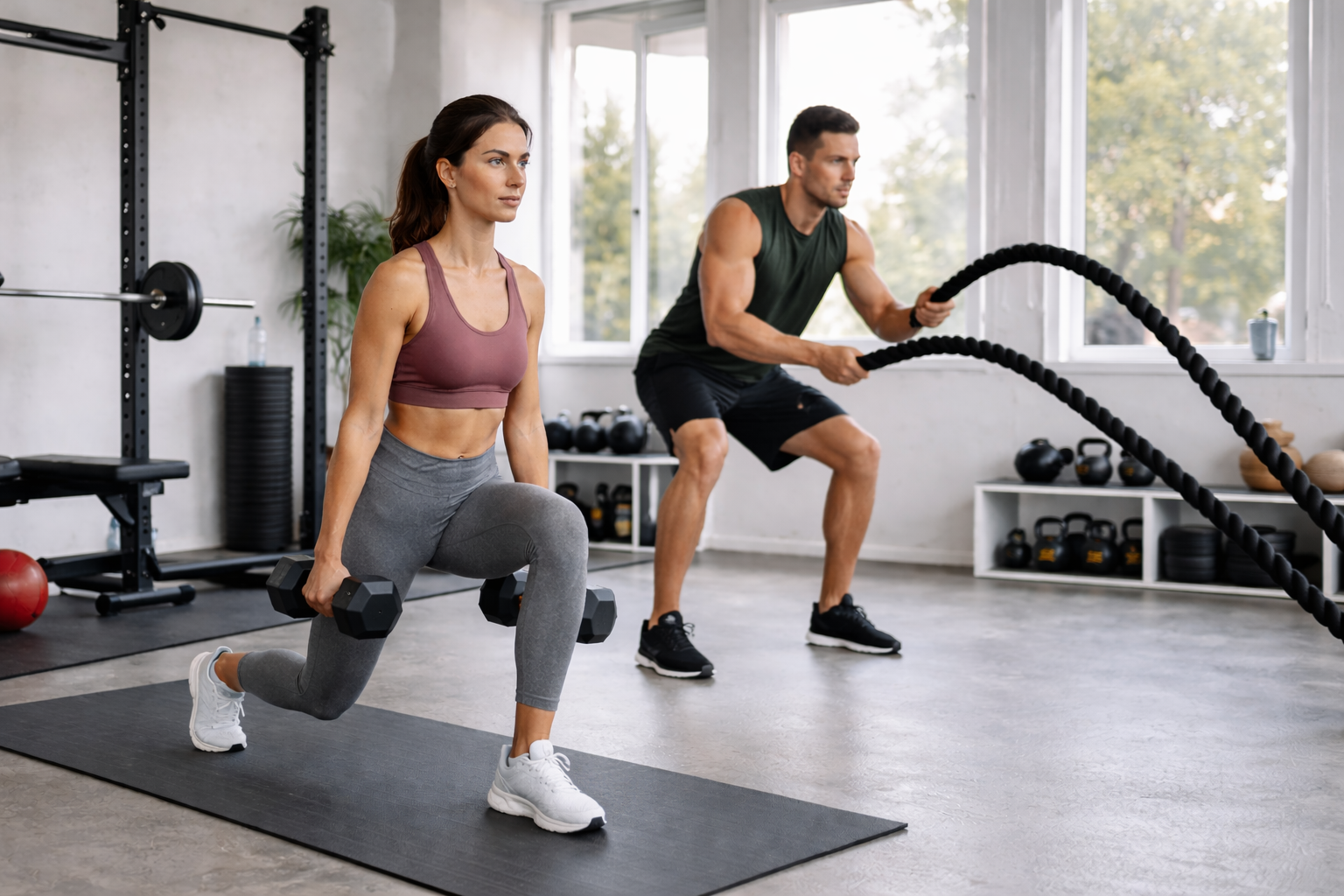
Table of Contents
What Is a Free Hybrid Training Program?
If you’ve been scrolling through fitness content lately, you’ve probably come across the term “hybrid training.” But what exactly does it mean, and why is everyone talking about it?
A free hybrid training program combines different training styles—typically strength training and cardiovascular conditioning—into one comprehensive workout plan. Instead of choosing between building muscle or improving endurance, hybrid training lets you do both. Think of it as getting the best of all worlds without spending a dime on expensive gym memberships or personal trainers.
The beauty of free hybrid training is that it’s accessible to everyone. Whether you’re working out at home with minimal equipment or hitting a local park, you can design a program that fits your lifestyle, goals, and fitness level.
Why Choose Hybrid Training?
Traditional workout programs often focus on one thing: either you’re lifting weights to build muscle, or you’re running to improve cardiovascular health. But real-world fitness demands more than just one dimension of strength.
Hybrid training examples show us that combining different modalities creates well-rounded athletes. You’ll develop muscular strength, cardiovascular endurance, mobility, and functional fitness all at once. This approach mirrors how our bodies naturally move in everyday life—carrying groceries, climbing stairs, playing with kids, or hiking on weekends.
Another major advantage? You won’t get bored. Mixing up your workouts keeps things fresh and exciting, which means you’re more likely to stick with your program long-term.
Best Hybrid Training Program Structure for Beginners
Starting a best hybrid training program doesn’t require complicated equipment or advanced knowledge. Here’s a simple structure that works:
Weekly Schedule
A solid beginner program typically includes 4-5 training days per week with 2-3 rest or active recovery days. This gives your body enough time to adapt and recover while maintaining consistency.
Sample Week:
- Monday: Strength training (upper body)
- Tuesday: Cardio conditioning
- Wednesday: Rest or light mobility work
- Thursday: Strength training (lower body)
- Friday: Hybrid workout (combination)
- Saturday: Active recovery (walking, yoga, stretching)
- Sunday: Rest
Training Components
Each session should last between 30-60 minutes depending on your fitness level and available time. Beginners should start with shorter sessions and gradually increase duration as they build endurance.
Hybrid Training Program Example: Your First Week
Let’s break down what a hybrid training program example might look like for someone just starting out:
Day 1: Upper Body Strength
- Push-ups (3 sets of 8-12 reps)
- Bodyweight rows using a table (3 sets of 8-10 reps)
- Pike push-ups for shoulders (3 sets of 6-8 reps)
- Plank hold (3 sets of 30-45 seconds)
Day 2: Cardio Conditioning
- 5-minute warm-up walk
- 20 minutes of interval walking/jogging (1 minute jog, 2 minutes walk)
- 5-minute cool-down walk
- Light stretching
Day 3: Lower Body Strength
- Bodyweight squats (3 sets of 12-15 reps)
- Alternating lunges (3 sets of 10 reps per leg)
- Glute bridges (3 sets of 12-15 reps)
- Wall sit (3 sets of 30-45 seconds)
Day 4: Hybrid Circuit
- Complete 3 rounds with minimal rest:
- 10 squats
- 8 push-ups
- 30-second high knees
- 12 alternating lunges
- 30-second plank
- 30-second jumping jacks
This circuit combines strength and cardio elements, giving you the full hybrid experience.
Hybrid Training Examples at Home
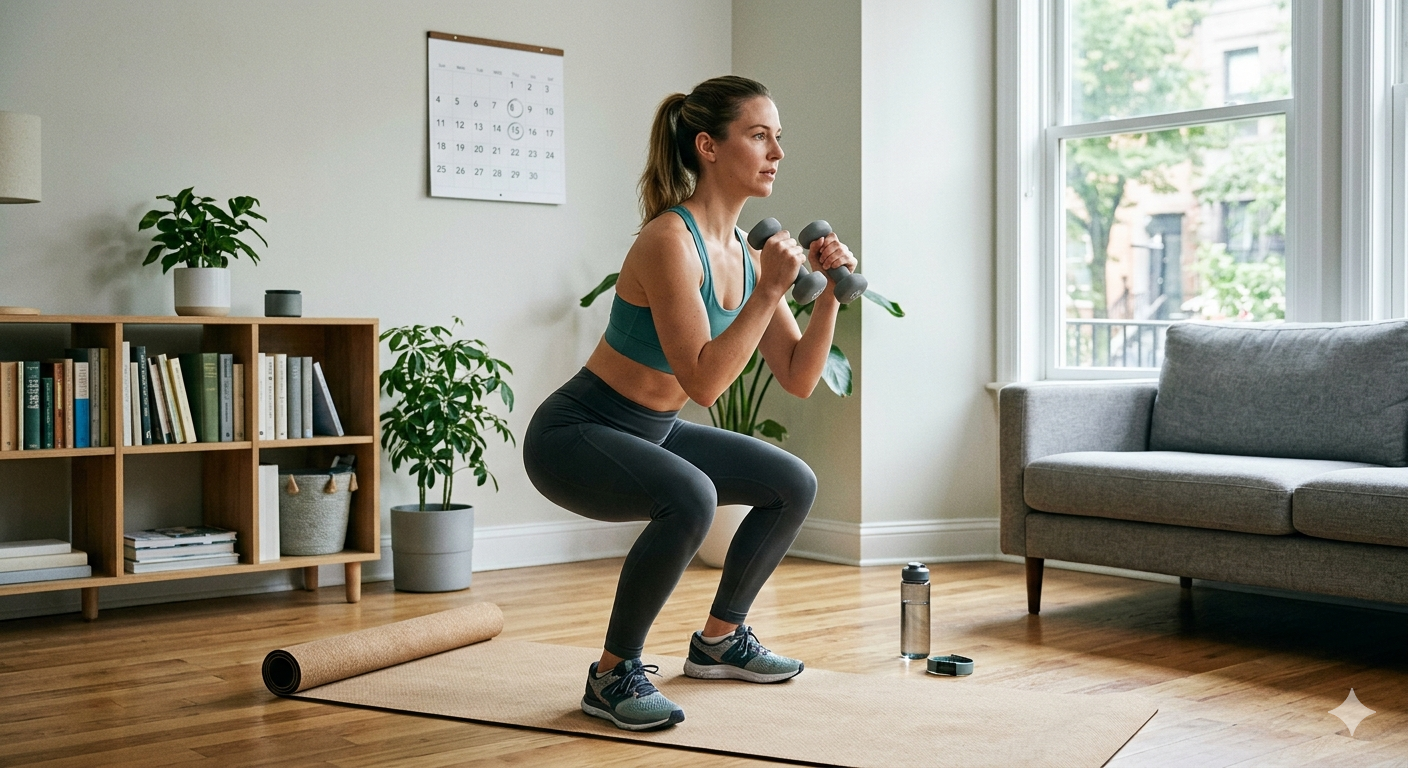
One of the biggest myths about fitness is that you need a gym to get results. Hybrid training examples at home prove otherwise. Your living room, backyard, or even a small apartment can become your training ground.
Minimal Equipment Options
Bodyweight Only: You can create an effective program using nothing but your body weight. Exercises like squats, push-ups, lunges, planks, and burpees provide both strength and cardio benefits.
With Basic Equipment: Adding just a few inexpensive items opens up more possibilities:
- Resistance bands for added strength work
- A jump rope for intense cardio intervals
- A sturdy chair or bench for step-ups and elevated exercises
- Filled water bottles as light dumbbells
Sample At-Home Hybrid Workout
Try this 30-minute session that requires zero equipment:
Warm-up (5 minutes):
- March in place
- Arm circles
- Leg swings
- Cat-cow stretches
Main Workout (20 minutes – 4 rounds):
- 12 squats
- 10 push-ups (modify on knees if needed)
- 20 mountain climbers
- 10 reverse lunges per leg
- 30-second plank
Cool-down (5 minutes):
- Walking in place
- Deep breathing
- Full body stretching
Hybrid Training Examples for Beginners: Progressive Approach
When you’re new to hybrid training examples for beginners, the key is progression. You can’t expect to jump into advanced workouts on day one, and that’s perfectly fine.
Week 1-2: Foundation Building
Focus on learning proper form and building basic conditioning. Your workouts should feel challenging but not overwhelming. If an exercise is too difficult, modify it. Can’t do regular push-ups? Start on your knees. Struggling with lunges? Hold onto a wall for balance.
Week 3-4: Adding Intensity
Once you’re comfortable with the movements, start adding intensity. This might mean doing more reps, adding an extra set, reducing rest time between exercises, or increasing the speed of your cardio intervals.
Week 5-6: Increasing Complexity
Now you can introduce more complex movements and longer workout sessions. Try combination exercises like squat-to-press or add plyometric elements like jump squats.
Week 7-8: Building Endurance
Focus on completing full workouts with less rest. Your body should be adapting nicely, and movements that felt difficult in week one now feel manageable.
Creating Your Own Free Hybrid Training Program
Ready to design your personalized plan? Here’s how to build a free hybrid training program that works for you:
Step 1: Assess Your Starting Point
Be honest about your current fitness level. Can you do 10 push-ups? Run for 5 minutes straight? Understanding where you are helps you set realistic starting points.
Step 2: Set Clear Goals
What do you want to achieve? More energy? Weight loss? Better overall fitness? Your goals will shape your program structure.
Step 3: Choose Your Training Split
Decide how many days per week you can realistically commit. Three to four days is perfect for beginners. Don’t overcommit and burn out.
Step 4: Select Exercises
Pick 4-6 exercises for each workout. Include a mix of upper body, lower body, core, and cardio elements. Start with fundamental movements before advancing to complex exercises.
Step 5: Track Your Progress
Keep a simple workout log. Note what exercises you did, how many reps, and how you felt. This helps you see improvement over time and adjust when needed.
Common Mistakes to Avoid
Even with the best hybrid training program, beginners often make these errors:
Doing Too Much Too Soon: Your enthusiasm is great, but overtraining leads to burnout or injury. Start conservatively and build gradually.
Skipping Warm-ups and Cool-downs: These aren’t optional. They prepare your body for work and aid recovery afterward.
Ignoring Rest Days: Your muscles grow and adapt during rest, not during the workout itself. Rest days are when the magic happens.
Poor Form Over Speed: It’s better to do 10 perfect squats than 20 sloppy ones. Quality trumps quantity every time.
Inconsistent Training: Working out intensely for two weeks then taking a month off won’t deliver results. Consistency beats intensity.
Nutrition and Recovery Tips
Your free hybrid training program is only part of the equation. What you do outside the gym matters just as much:
Fuel Your Body: Eat a balanced diet with adequate protein for muscle recovery, complex carbs for energy, and healthy fats for hormone production.
Stay Hydrated: Water is crucial for performance and recovery. Aim for at least 8 glasses daily, more if you’re sweating heavily.
Sleep Well: Aim for 7-9 hours of quality sleep. This is when your body repairs and strengthens muscles.
Listen to Your Body: Soreness is normal. Sharp pain is not. If something hurts beyond typical muscle fatigue, take an extra rest day or modify your workout.
Measuring Your Success
Progress isn’t just about the number on the scale. Here are better ways to measure success with your hybrid training:
- Can you do more reps than when you started?
- Do you recover faster between sets?
- Have daily activities become easier?
- Are you sleeping better?
- Do you have more energy throughout the day?
- Has your mood improved?
These non-scale victories are often more meaningful than pounds lost.
Taking Your Training to the Next Level
Once you’ve completed 8-12 weeks of your beginner program, you can progress by adding new challenges. Consider increasing workout frequency, adding resistance with weights or bands, trying more advanced exercise variations, or incorporating sport-specific training.
The beauty of hybrid training is that it grows with you. There’s always a new challenge, a new goal, or a new combination to try.
Frequently Asked Questions
What is hybrid training? Hybrid training combines multiple training modalities—typically strength training and cardiovascular conditioning—into one comprehensive program. It develops muscular strength, endurance, and functional fitness simultaneously rather than focusing on just one aspect.
How many days a week should I do hybrid training as a beginner? Beginners should start with 3-4 training days per week, allowing for adequate rest and recovery. As you build fitness and adapt to the workload, you can gradually increase to 4-5 days per week.
Can I do hybrid training at home without equipment? Absolutely! Bodyweight exercises like squats, push-ups, lunges, planks, and burpees create effective hybrid workouts. You can add minimal equipment like resistance bands or a jump rope for more variety, but they’re not necessary to start.
What’s the difference between hybrid training and CrossFit? While both combine strength and cardio, CrossFit is a specific branded program with defined workouts and competitive elements. Hybrid training is a broader approach that you can customize to your goals, fitness level, and available equipment without following a structured program.
How long should a hybrid training workout last? Beginner hybrid training sessions typically last 30-45 minutes, including warm-up and cool-down. As you advance, sessions may extend to 60 minutes depending on your program structure and goals.
Will hybrid training help me lose weight? Hybrid training can support weight loss when combined with proper nutrition. It burns calories during workouts while building muscle that increases your resting metabolic rate. However, diet plays a crucial role in weight loss alongside exercise.
Is hybrid training better than traditional strength or cardio programs? It’s not about better or worse—it depends on your goals. If you want overall fitness, athletic performance, and functional strength, hybrid training is excellent. If you have specific goals like competitive powerlifting or marathon running, a specialized program might be more appropriate.

Faisal is the founder and content creator of The Workout Haven, a fitness and wellness blog focused on home workouts, weight loss, strength training, yoga, and healthy lifestyle habits. He creates easy-to-follow, beginner-friendly fitness guides backed by research, practical experience, and real-world application. Faisal’s goal is to help people stay active, build strength, and improve overall health—no gym or expensive equipment required.