
Low-Impact Exercises for Seniors Over 65 | Low-impact cardio
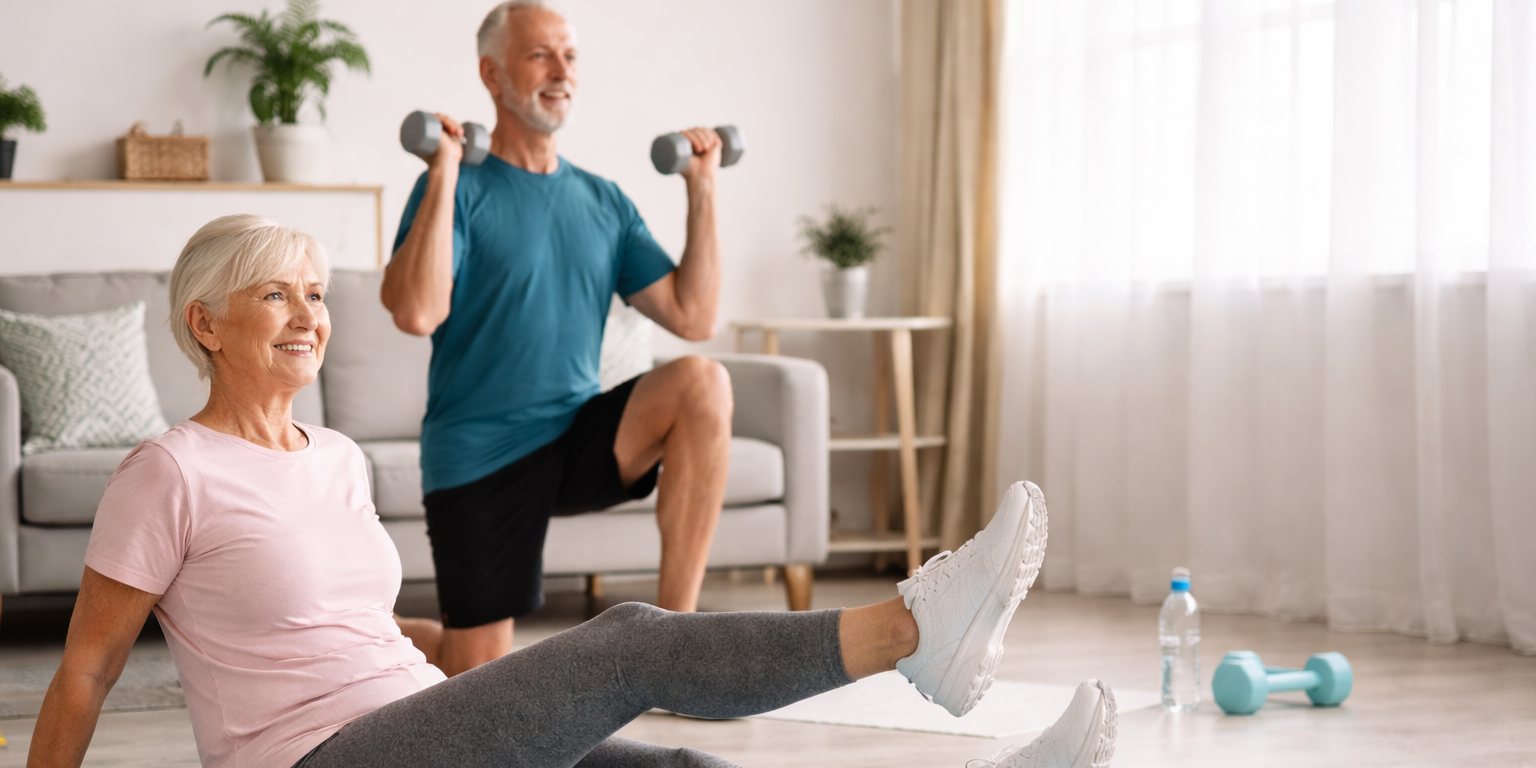
Table of Contents
Why Low-Impact Cardio Matters for Your Health
As we age, staying active becomes more important than ever, but that doesn’t mean you need to push your body to its limits. Low-impact cardio offers the perfect solution for seniors over 65 who want to maintain their health without putting unnecessary stress on joints, bones, and muscles.
You might be wondering what makes an exercise “low-impact.” Simply put, low-impact cardio exercises keep at least one foot on the ground at all times, reducing the jarring impact on your knees, hips, and back. This makes them ideal for anyone dealing with arthritis, balance issues, or general joint sensitivity.
The beauty of low-impact exercises for seniors over 65 at home is that you don’t need expensive equipment or a gym membership. Your living room can become your personal fitness studio, and you can exercise at your own pace, on your own schedule.
The Health Benefits You’ll Experience
Regular low-impact cardio exercises deliver remarkable benefits that can transform your daily life. You’ll notice improved cardiovascular health, which means your heart becomes stronger and more efficient at pumping blood throughout your body. This translates to more energy for activities you enjoy, whether that’s gardening, playing with grandchildren, or traveling.
Balance and coordination naturally improve when you engage in consistent movement. This is crucial for preventing falls, which remain one of the leading causes of injury among seniors. Additionally, these exercises help maintain bone density, reducing your risk of osteoporosis and fractures.
Mental health benefits are equally impressive. Exercise releases endorphins that boost your mood and reduce feelings of anxiety and depression. Many seniors report sleeping better and feeling more confident in their physical abilities after establishing a regular routine.
Low-Impact Cardio Exercises for Seniors at Home
Walking in Place
This is perhaps the simplest yet most effective low-impact workout for seniors. Stand with feet hip-width apart and march in place, lifting your knees to a comfortable height. Swing your arms naturally as you would during a regular walk. Start with two minutes and gradually increase your duration.
To add variety, walk in different directions—forward, backward, or side to side. You can do this while watching your favorite television show or listening to music.
Chair Marching
If standing feels challenging, chair marching provides excellent cardiovascular benefits while seated. Sit near the edge of a sturdy chair with your back straight. Lift one knee at a time in a marching motion, pumping your arms as you go. This low-impact cardio exercise is perfect for those with balance concerns or limited mobility.
Step Touches
Stand with feet together and step to the right, bringing your left foot to meet it. Tap your left foot beside your right, then step back to the left. Continue this side-to-side movement, adding arm movements by raising your arms to shoulder height as you step. This exercise improves lateral mobility and coordination.
Wall Push-Ups
While primarily a strength exercise, wall push-ups performed in sets can elevate your heart rate safely. Stand arm’s length from a wall, place your palms flat against it at shoulder height, and perform push-ups by bending your elbows. Do 10-15 repetitions, rest, and repeat.
Heel-Toe Raises
Standing behind a chair for support, rise up on your toes, hold for a count of two, then rock back onto your heels, lifting your toes off the ground. This exercise strengthens calves and improves ankle stability while providing gentle cardiovascular stimulation.
15-Minute Low-Impact Workout for Seniors
Short on time? This quick routine delivers maximum benefits in minimal time:
Minutes 1-3: Walking in place at a comfortable pace to warm up Minutes 4-6: Chair marching with arm circles Minutes 7-9: Step touches, gradually increasing speed Minutes 10-12: Heel-toe raises with chair support Minutes 13-15: Gentle walking in place to cool down with deep breathing
Perform this routine daily, and you’ll notice improvements in stamina within just a few weeks. The key is consistency, not intensity.
Low-Impact Workout for Seniors: 30 Minutes
For those ready to commit to longer sessions, this 30-minute routine provides comprehensive cardiovascular conditioning:
Warm-up (5 minutes): Gentle walking in place and shoulder rolls Circuit 1 (8 minutes): Alternate between marching in place, step touches, and arm raises Circuit 2 (8 minutes): Chair sits and stands (if able), wall push-ups, and side steps Circuit 3 (7 minutes): Heel-toe raises, knee lifts, and gentle torso twists Cool-down (2 minutes): Slow walking and stretching
Rest for 30-60 seconds between circuits. Listen to your body and modify any movement that causes discomfort.
Exercise for Seniors Over 75 at Home
If you’re over 75, your exercise routine should emphasize safety and gradual progression. All the exercises mentioned above work wonderfully, but consider these additional tips:
- Always have a sturdy chair or counter nearby for support
- Focus on smaller, controlled movements rather than range of motion
- Break your exercise into multiple short sessions throughout the day
- Stay hydrated and never exercise on an empty stomach
- Wear supportive, non-slip footwear
Remember, movement is medicine at any age. Even five minutes of activity is better than none, and you can build from there as your strength increases.
Low-Impact Exercises for Seniors Over 65 Free
You don’t need to spend money to stay fit. Here are completely free resources and approaches:
- YouTube offers thousands of free senior exercise videos
- Local community centers often provide free or low-cost senior fitness classes
- Public parks with walking paths offer perfect venues for outdoor cardio
- Your own body weight provides all the resistance you need
- Free smartphone apps can guide your workouts and track progress
The most effective exercise program is one you’ll actually do consistently. Start with what you have and where you are right now.
Safety Tips and When to Stop
Always consult your healthcare provider before starting any new exercise program, especially if you have chronic conditions or take medications that affect balance or heart rate.
Stop exercising immediately if you experience:
- Chest pain or pressure
- Severe shortness of breath
- Dizziness or lightheadedness
- Sharp or sudden pain in any joint
- Excessive fatigue that doesn’t resolve with rest
These symptoms require medical attention. However, mild muscle soreness the day after exercise is normal and actually indicates you’re building strength.
Building Your Sustainable Routine
Success comes from creating habits that fit naturally into your lifestyle. Choose a specific time each day for exercise—many seniors find morning workouts energizing, while others prefer afternoon sessions. Set out your exercise clothes the night before as a visual reminder.
Track your progress in a simple notebook or calendar. Mark off each day you complete your workout, and celebrate weekly milestones. Consider finding an exercise buddy, whether in person or by checking in via phone. Accountability makes consistency easier.
Most importantly, be patient with yourself. Some days will feel easier than others, and that’s perfectly normal. The goal isn’t perfection—it’s progress and persistence.
Beginner Low Impact Cardio Workout For Seniors | 15 Minutes
Frequently Asked Questions
Q: How often should seniors over 65 do low-impact cardio?
A. Aim for at least 150 minutes of moderate-intensity cardio per week, which breaks down to about 30 minutes five days a week. However, even 10-minute sessions provide benefits, so start where you can and build gradually.
Q: Can I do low-impact cardio exercises every day?
A. Yes, low-impact exercises are gentle enough for daily practice. Your body needs movement to stay healthy, and these exercises won’t overtax your recovery systems. Just listen to your body and take rest days if you feel unusually tired or sore.
Q: What’s the difference between low-impact and no-impact exercises?
A. Low-impact exercises keep one foot on the ground, while no-impact exercises eliminate ground contact entirely, like swimming or seated exercises. Both are excellent options for seniors, with the choice depending on your mobility and preferences.
Q: How do I know if I’m working hard enough during low-impact cardio?
A. You should be able to talk but not sing during exercise—this indicates moderate intensity. Your breathing should be slightly elevated, but you shouldn’t be gasping for air. If you can have a full conversation easily, increase your pace slightly.
Q: What if I have arthritis or joint pain?
A. Low-impact cardio exercises are specifically designed for people with joint concerns. Start slowly, perhaps with just chair exercises, and gradually add more movement as your body adapts. Many people find their joint pain actually decreases with regular, gentle exercise.
Q: Do I need special equipment for low-impact workouts at home?
A. No special equipment is required. A sturdy chair and comfortable clothing are all you need. As you progress, you might enjoy adding resistance bands or light hand weights, but these are optional extras, not necessities.
Ready to start your fitness journey? Remember, the best exercise is the one you’ll actually do. Start with just 5-10 minutes today, and build from there. Your future self will thank you for taking this important step toward better health and independence.

Faisal is the founder and content creator of The Workout Haven, a fitness and wellness blog focused on home workouts, weight loss, strength training, yoga, and healthy lifestyle habits. He creates easy-to-follow, beginner-friendly fitness guides backed by research, practical experience, and real-world application. Faisal’s goal is to help people stay active, build strength, and improve overall health—no gym or expensive equipment required.