
Kettlebell Workout for Beginners | Full Guide
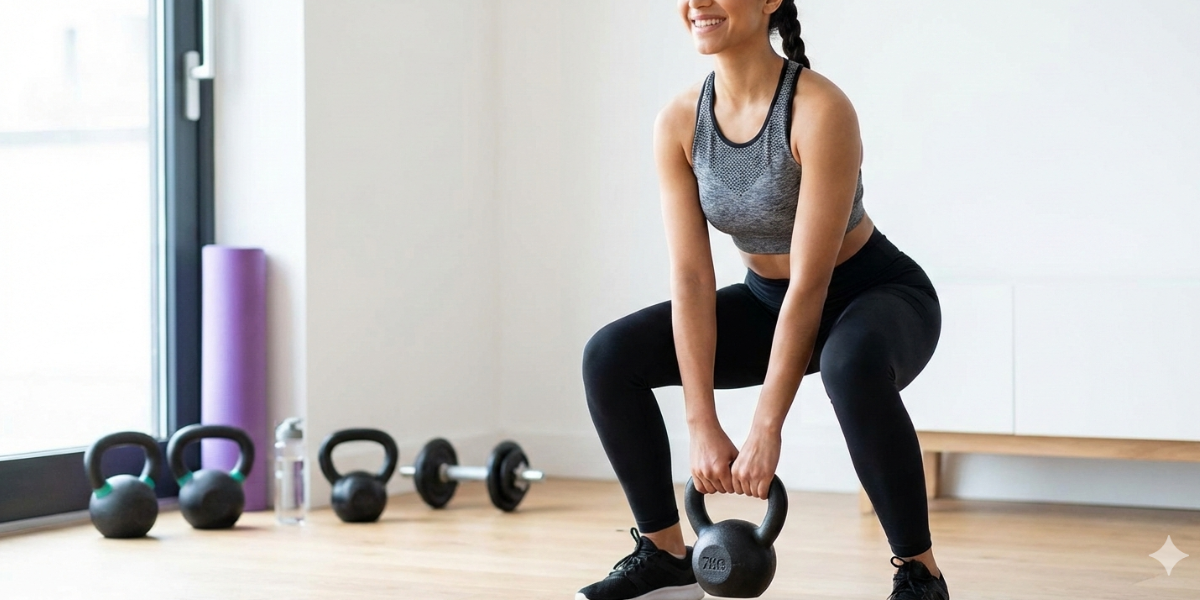
Table of Contents
Introduction
Starting a kettlebell workout doesn’t have to be intimidating. Whether you’re completely new to fitness or transitioning from other forms of exercise, kettlebells offer a versatile, efficient way to build strength, improve cardiovascular health, and transform your body. This guide will walk you through everything you need to know about beginning your kettlebell journey, from choosing the right weight to mastering fundamental movements.
What Makes Kettlebell Workouts Perfect for Beginners?
Kettlebell training has exploded in popularity, and for good reason. Unlike traditional dumbbells, the unique design of kettlebells—with their offset center of gravity—engages multiple muscle groups simultaneously. This means you’re getting a full body kettlebell workout for beginners that maximizes efficiency and results.
The beauty of a kettlebell workout beginner program is its simplicity. You only need one piece of equipment to work your entire body. Kettlebells improve functional strength, meaning the movements translate directly to everyday activities like lifting groceries, picking up children, or carrying luggage. They also combine strength training with cardiovascular conditioning, giving you more bang for your buck in less time.
Choosing Your First Kettlebell
Before diving into the best kettlebell workouts for beginners, you’ll need to select the right weight. This is crucial for preventing injury and ensuring steady progress.
For women just starting out, an 8kg (18 lbs) kettlebell is typically ideal, though some may prefer starting with 6kg (13 lbs). Men generally begin with 12kg (26 lbs) or 16kg (35 lbs). If you’re a beginner kettlebell workout for women participant over 50, or if you have any existing joint concerns, it’s wise to start on the lighter side. You can always progress to heavier weights as your strength improves.
The investment is worthwhile—one quality kettlebell can provide years of effective workouts, and you’ll likely only need 2-3 different weights as you advance through your training.
Essential Kettlebell Exercises for Beginners
Let’s break down the fundamental movements that form the foundation of any kettlebell workout program for beginners. Mastering these exercises will set you up for long-term success.
The Kettlebell Swing
The swing is the cornerstone of kettlebell training. It’s a hip-hinge movement that targets your glutes, hamstrings, core, and back while elevating your heart rate.
How to perform: Stand with feet shoulder-width apart, kettlebell on the ground slightly in front of you. Hinge at the hips (not the knees), grab the kettlebell with both hands, and hike it back between your legs. Drive through your hips explosively to swing the kettlebell up to chest height. Let momentum carry the weight—don’t lift with your arms. Control the descent and repeat.
Start with 10-15 swings for 3 sets, resting 60 seconds between sets.
The Goblet Squat
This squat variation teaches proper form while building leg strength and core stability.
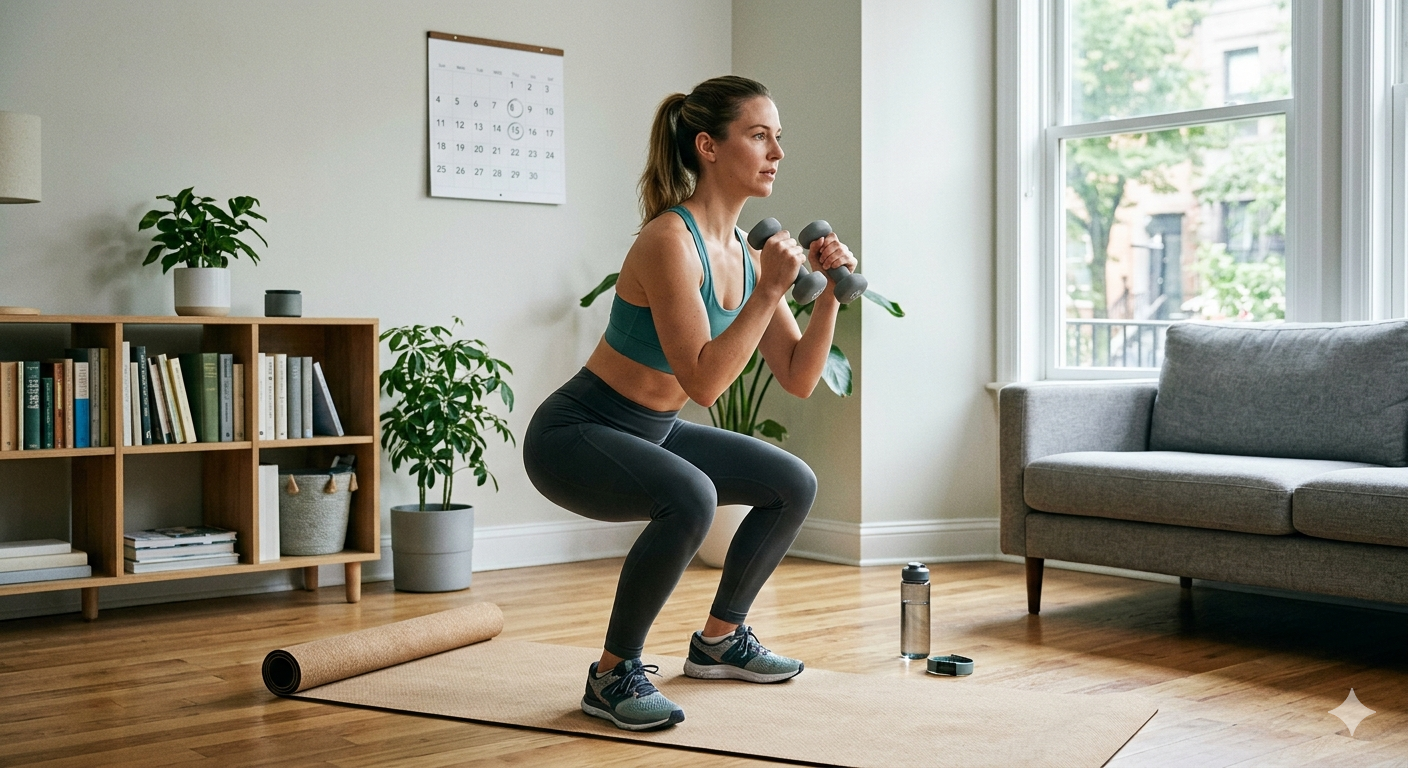
How to perform: Hold the kettlebell by the horns (the handle) at chest level, elbows tucked in. Stand with feet slightly wider than hip-width. Lower into a squat, keeping your chest up and weight in your heels. Your elbows should track between your knees. Push through your heels to stand back up.
Perform 10-12 repetitions for 3 sets.
The Kettlebell Deadlift
Perfect for learning the hip-hinge pattern with minimal complexity.
How to perform: Place the kettlebell on the ground between your feet. Stand with feet hip-width apart. Hinge at the hips, keeping your back straight and core engaged. Grip the kettlebell handle with both hands. Drive through your heels and squeeze your glutes to stand up, bringing the kettlebell with you. Lower with control.
Complete 8-10 repetitions for 3 sets.
The Overhead Press
This builds shoulder strength and stability while challenging your core.
How to perform: Clean the kettlebell to the “rack position”—resting against your forearm at shoulder height. Press the weight overhead, rotating your palm forward at the top. Keep your core tight and avoid arching your back. Lower with control.
Do 6-8 presses per arm for 3 sets.
Full Body Kettlebell Workout for Beginners
Here’s a complete workout that targets every major muscle group. This routine is perfect for those following kettlebell workout routines for beginners and can be completed in 30-40 minutes.
Warm-up (5 minutes):
- Arm circles: 10 each direction
- Bodyweight squats: 15 reps
- Hip circles: 10 each direction
- Jumping jacks: 30 seconds
Main Workout:
- Kettlebell Swings: 15 reps x 3 sets
- Goblet Squats: 12 reps x 3 sets
- Kettlebell Deadlifts: 10 reps x 3 sets
- Overhead Press: 8 reps per arm x 3 sets
- Kettlebell Rows: 10 reps per arm x 3 sets
- Russian Twists: 20 reps (10 per side) x 3 sets
Rest 60-90 seconds between sets. As you progress, you can reduce rest time or increase repetitions.
Cool-down (5 minutes): Stretch all major muscle groups, holding each stretch for 30 seconds.
Kettlebell Ab Workout for Beginners
Your core is crucial for every kettlebell movement, but you can also target it directly with these exercises:
Turkish Get-Up (Simplified): This complex movement builds total-body strength but can be broken down into steps. Start by learning the first few steps of the movement, lying on your back and pressing the kettlebell overhead while sitting up.
Russian Twists: Sit on the ground with knees bent, holding the kettlebell at chest level. Lean back slightly and rotate the kettlebell from side to side, tapping it on the ground beside your hips.
Kettlebell Windmills: This advanced exercise works obliques and shoulders. Beginners should start with a very light weight or even bodyweight to learn the movement pattern.
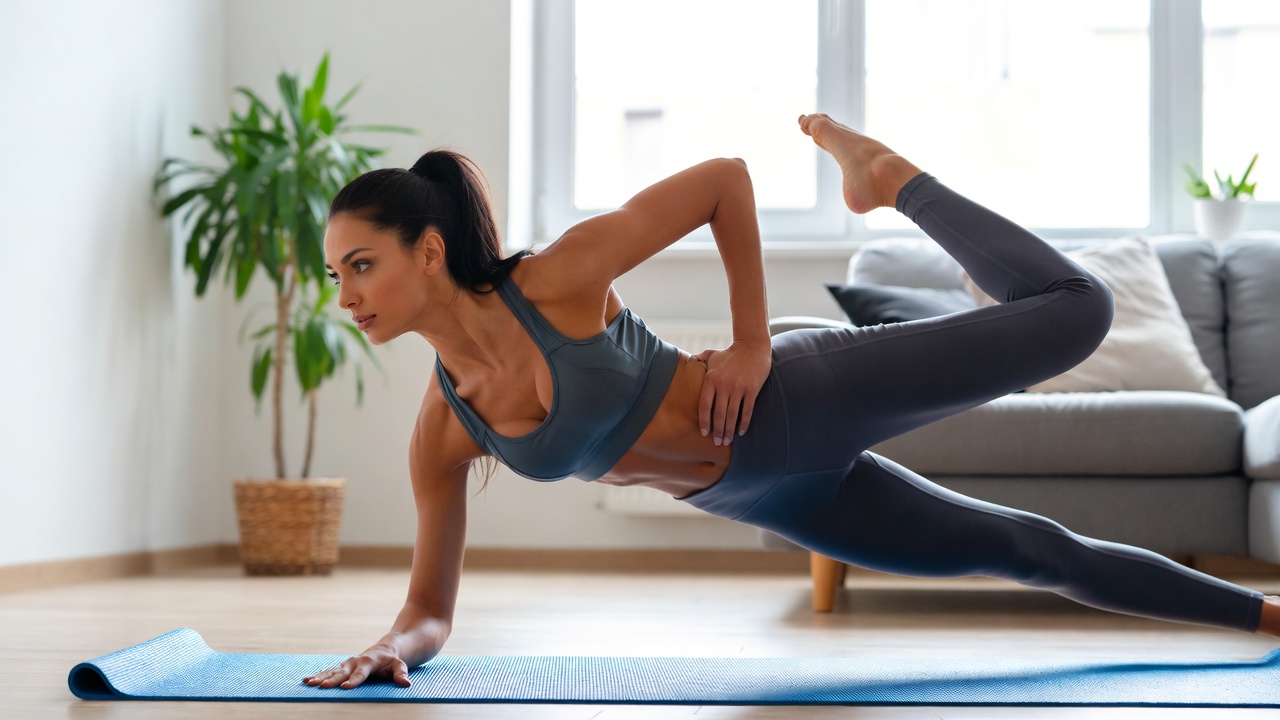
Plank Pulls: In a plank position, place a kettlebell beside you. Reach under your body with the opposite hand and pull the kettlebell across to the other side. This challenges stability while building core strength.
Beginner Kettlebell Workout for Women Over 50
If you’re exploring kettlebell workouts for female beginners over 50, the principles remain the same, but the approach should emphasize safety and gradual progression. Start with lighter weights and focus extensively on form before increasing intensity.
Prioritize exercises that improve bone density, balance, and functional strength—all crucial as we age. The goblet squat, for instance, helps maintain mobility and leg strength for everyday activities. Kettlebell deadlifts strengthen the posterior chain, which combats the effects of prolonged sitting.
Include more rest days in your schedule—training 2-3 times per week with a day of rest between sessions allows for proper recovery. Listen to your body and never push through joint pain. Some muscle fatigue is normal and healthy; sharp or shooting pains are not.
Consider working with a certified kettlebell instructor for your first few sessions to ensure proper form and receive personalized modifications based on your fitness level and any health considerations.
Kettlebell Workout Plan for Beginners: Your First 8 Weeks
Having a structured kettlebell workout plan for beginners keeps you consistent and tracks your progress. Here’s a simple 8-week progression:
Weeks 1-2: Foundation Phase
- Focus: Learning proper form for all basic movements
- Frequency: 2 sessions per week
- Exercises: Swings, goblet squats, deadlifts (2 sets of 8-10 reps each)
- Goal: Master technique with conservative weight
Weeks 3-4: Building Phase
- Focus: Increasing volume and adding exercises
- Frequency: 2-3 sessions per week
- Exercises: Add overhead press and rows to your routine (3 sets of 8-12 reps)
- Goal: Build movement confidence and muscular endurance
Weeks 5-6: Strength Phase
- Focus: Progressive overload
- Frequency: 3 sessions per week
- Exercises: Full routine with 3-4 sets of each exercise
- Goal: Consider increasing weight by 2-4 kg if form remains solid
Weeks 7-8: Consolidation Phase
- Focus: Refining technique and building work capacity
- Frequency: 3 sessions per week
- Exercises: Introduce circuit-style training, performing exercises back-to-back
- Goal: Complete workouts with minimal rest, improving cardiovascular fitness
After eight weeks, reassess your goals and either progress to more advanced kettlebell workout program for beginners variations or increase your weights.
Common Mistakes to Avoid
Even the best kettlebell workouts for beginners can lead to injury if performed incorrectly. Watch out for these common errors:
Squatting the swing: The kettlebell swing is a hip-hinge, not a squat. Your power comes from explosive hip extension, not your legs.
Rounding your back: Whether swinging, deadlifting, or cleaning, maintain a neutral spine. Engage your core and keep your chest proud.
Using arm strength: Kettlebell exercises are about generating power from your hips and core, with your arms acting as connections to the weight. If your arms are getting more tired than your legs and glutes during swings, you’re doing it wrong.
Going too heavy, too soon: Ego has no place in beginner training. Master the movements with lighter weights before progressing.
Neglecting rest and recovery: Your muscles grow stronger during rest, not during the workout. Don’t train the same muscle groups on consecutive days.
Tips for Staying Consistent
Starting a kettlebell workout routine is exciting, but consistency is what delivers results. Here are strategies to help you stick with it:
Schedule your workouts like appointments. Whether it’s Monday, Wednesday, Friday mornings or Tuesday, Thursday evenings, having a set routine makes it automatic.
Track your progress in a simple notebook or app. Record the exercises, weights, reps, and sets. Seeing your improvement over weeks is incredibly motivating.
Start small. If the full workout feels overwhelming, commit to just 15 minutes. You can always do more once you begin, but removing the barrier of “I need 45 minutes” helps you show up consistently.
Find a workout buddy or join an online community. Accountability and shared experiences make the journey more enjoyable.
Celebrate small wins. Did you complete all three workouts this week? Increase your weight by 2 kg? Nail the form on your swings? These milestones matter.
Frequently Asked Questions
How often should beginners do kettlebell workouts?
Beginners should start with 2-3 kettlebell sessions per week, allowing at least one day of rest between workouts. This frequency provides enough stimulus for strength gains while giving your body adequate recovery time. As you advance, you can increase to 4-5 sessions per week.
What weight kettlebell should a beginner use?
Women typically start with 6-8 kg (13-18 lbs), while men usually begin with 12-16 kg (26-35 lbs). Your ideal starting weight depends on your current fitness level, but it’s always better to start lighter and focus on form. You should be able to complete all exercises with proper technique without straining.
Can you lose weight with kettlebell workouts?
Absolutely. Kettlebell training burns significant calories due to its combination of strength training and cardiovascular exercise. A 30-minute kettlebell session can burn 300-600 calories depending on intensity. Combined with proper nutrition, kettlebell workouts are highly effective for fat loss while building lean muscle.
How long should a beginner kettlebell workout last?
A complete beginner session including warm-up and cool-down should last 30-40 minutes. As you become more efficient with movements and need less rest between sets, you might complete workouts in 25-30 minutes. Quality and consistency matter more than duration.
Are kettlebell workouts safe for seniors?
Yes, when done correctly with appropriate weight selection and proper form. Kettlebell training can improve bone density, balance, functional strength, and cardiovascular health—all important for aging well. Seniors should start with lighter weights, possibly work with a trainer initially, and focus on controlled movements. Always consult with your doctor before beginning any new exercise program.
What’s the difference between a kettlebell and a dumbbell workout?
Kettlebells have an offset center of gravity that creates instability, engaging more stabilizer muscles and core throughout each movement. Many kettlebell exercises, like swings and snatches, are ballistic (explosive) movements that combine strength and cardio. Dumbbells are excellent for isolated strength exercises but don’t provide the same dynamic, full-body training that kettlebells offer.
Conclusion
Starting your kettlebell workout journey as a beginner opens the door to efficient, effective, and engaging fitness training. Whether you’re looking for the best kettlebell workouts for beginners, a full body kettlebell workout for beginners routine, or a specialized beginner kettlebell workout for women program, the principles remain consistent: start with proper form, progress gradually, and stay consistent.
Remember that everyone starts somewhere. The person swinging a 24 kg kettlebell with perfect form today was once a beginner picking up their first 8 kg bell. Your consistency and commitment to learning proper technique will determine your success more than any other factor.
Invest in one quality kettlebell, dedicate yourself to learning the fundamental movements, and follow a structured kettlebell workout plan for beginners. Within weeks, you’ll notice improvements in strength, endurance, and overall fitness. Within months, you’ll wonder why you didn’t start sooner.
Now grab your kettlebell and get swinging—your stronger, more capable self is waiting on the other side of consistent action.

Faisal is the founder and content creator of The Workout Haven, a fitness and wellness blog focused on home workouts, weight loss, strength training, yoga, and healthy lifestyle habits. He creates easy-to-follow, beginner-friendly fitness guides backed by research, practical experience, and real-world application. Faisal’s goal is to help people stay active, build strength, and improve overall health—no gym or expensive equipment required.