

Functional Strength Workout Program 2026
Table of Contents
What is a Functional Strength Workout?
A functional strength workout is designed to train your muscles to work together and prepare them for daily tasks by simulating common movements you might do at home, at work, or in sports. Unlike traditional bodybuilding that isolates specific muscles, a functional workout program focuses on compound movements that engage multiple muscle groups simultaneously, improving coordination, balance, and overall strength.
When you carry groceries, lift a child, move furniture, or play recreational sports, you’re not using just one muscle in isolation. You’re using your entire body as a coordinated system. That’s exactly what functional strength training prepares you for. These workouts emphasize movements like squatting, pushing, pulling, rotating, and carrying—all patterns your body performs regularly in real life.
The beauty of functional strength training is its versatility. Whether you’re an athlete looking to improve performance, a busy parent wanting to keep up with your kids, or someone who wants to move better and feel stronger, a well-designed functional strength workout program can transform how your body performs.
Benefits of Functional Strength Training
Functional strength training offers benefits that extend far beyond the gym. First and foremost, it reduces your risk of injury in daily life. By training movement patterns rather than isolated muscles, you develop balanced strength and stability that protects your joints and connective tissues during everyday activities.
These workouts also improve your posture and core stability. Many functional exercises require you to maintain proper alignment while moving, which strengthens the deep stabilizing muscles that keep your spine safe and your body positioned correctly. Over time, this translates to less back pain, better balance, and more confidence in your movements.
Additionally, functional training is incredibly time-efficient. Since exercises work multiple muscle groups at once, you can get a complete full-body workout in less time than traditional split routines. This makes it perfect for people with busy schedules who still want to see real results.
Functional Strength at Home: No Gym Required
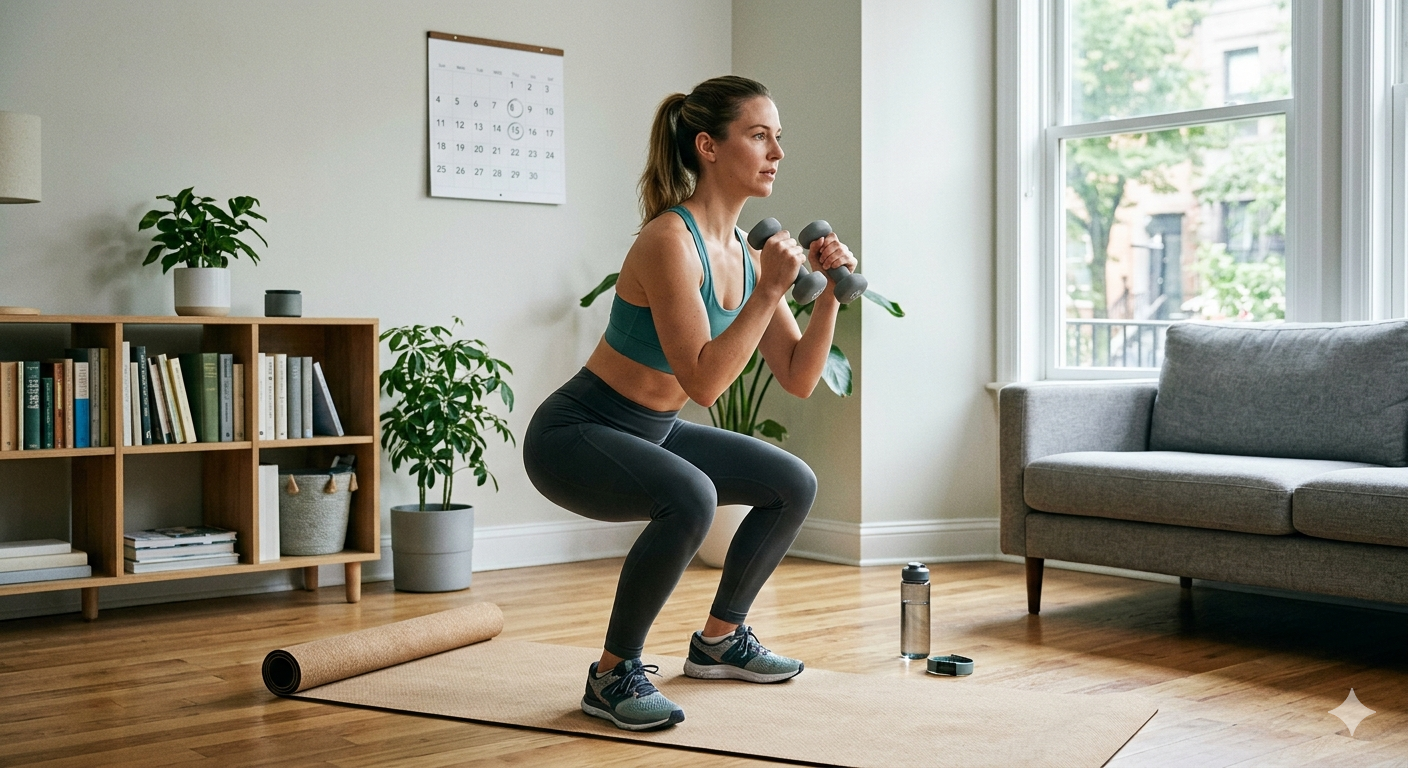
One of the biggest advantages of functional training is that you can do it anywhere. Functional strength at home workouts are not only possible but highly effective. You don’t need expensive equipment or a gym membership to build real-world strength.
Your own body weight provides plenty of resistance for challenging workouts. Movements like push-ups, squats, lunges, planks, and burpees are all functional exercises that require zero equipment. As you progress, simple additions like resistance bands, dumbbells, or kettlebells can add variety and intensity to your home workouts.
The key to successful functional strength at home training is focusing on movement quality over quantity. Perfect your form, control your tempo, and challenge yourself with variations that match your fitness level. A dedicated space in your living room, garage, or backyard is all you need to build a body that’s strong, mobile, and resilient.
Best Workout Split for Functional Strength
Choosing the best workout split for functional strength depends on your schedule, recovery capacity, and fitness goals. Unlike bodybuilding splits that divide the body into specific muscle groups, functional training splits are typically organized around movement patterns or training frequency.
A popular approach is the three-day full-body split, where you train your entire body three times per week with rest days in between. This allows you to hit all major movement patterns multiple times weekly while giving your body adequate recovery. Each session might include a push exercise, a pull exercise, a squat or lunge variation, a hinge movement, and core work.
Another effective option is the upper/lower split performed four days per week. This divides your training into two upper-body days (focusing on pushing and pulling movements) and two lower-body days (emphasizing squats, lunges, and hip hinges). This split provides more volume while still allowing sufficient recovery.
For beginners or those with limited time, a two-day full-body split can work wonderfully. Training just twice per week with comprehensive sessions that cover all movement patterns can maintain and even build functional strength, especially when combined with an active lifestyle.
Functional Strength Workout Program Free: Your Complete Plan
Here’s a comprehensive functional strength workout program free for you to follow. This four-week program progressively builds strength across all major movement patterns.
Week 1-2: Foundation Phase
Day 1: Full Body
- Bodyweight Squats: 3 sets of 12 reps
- Push-ups (modified if needed): 3 sets of 8-10 reps
- Dumbbell Rows: 3 sets of 10 reps per arm
- Reverse Lunges: 3 sets of 8 reps per leg
- Plank Hold: 3 sets of 30 seconds
Day 2: Full Body
- Goblet Squats: 3 sets of 10 reps
- Dumbbell Overhead Press: 3 sets of 8 reps
- Romanian Deadlifts: 3 sets of 10 reps
- Mountain Climbers: 3 sets of 20 total reps
- Dead Bug: 3 sets of 10 reps per side
Day 3: Full Body
- Step-ups: 3 sets of 8 reps per leg
- Dumbbell Chest Press: 3 sets of 10 reps
- Bent-over Rows: 3 sets of 10 reps
- Glute Bridges: 3 sets of 12 reps
- Side Plank: 3 sets of 20 seconds per side
Week 3-4: Progression Phase
Increase all sets to 4 sets, add 2 reps to each exercise, and decrease rest time from 90 seconds to 60 seconds between sets. This progression challenges your strength endurance, and work capacity.
Functional Bodyweight Workout Program
A functional bodyweight workout program is perfect for those who prefer training without equipment or need a travel-friendly routine. Bodyweight training develops relative strength—your ability to control and move your own body through space—which is perhaps the most functional strength of all.
Here’s a sample bodyweight circuit you can perform anywhere:
Circuit (Repeat 3-4 times):
- Prisoner Squats: 15 reps
- Push-up Variations: 10 reps
- Reverse Lunges: 10 reps per leg
- Pike Push-ups: 8 reps
- Plank to Down Dog: 10 reps
- Burpees: 8 reps
- Bicycle Crunches: 20 total reps
Rest 60-90 seconds between circuits. This routine targets all major muscle groups and movement patterns while elevating your heart rate for cardiovascular benefits.
The beauty of bodyweight training is infinite scalability. Make exercises easier by adjusting leverage, tempo, or range of motion. Make them harder with pauses, pulses, single-limb variations, or explosive movements.
Functional Workout Plan for Beginners
Starting your fitness journey with a functional workout plan for beginners sets you up for long-term success. The key is mastering fundamental movement patterns with proper form before adding complexity or intensity.
Begin with two to three workouts per week, allowing at least one day of rest between sessions. Each workout should last 30-45 minutes and include a warm-up, main exercise, and cool-down.
Beginner Workout Template:
Warm-up (5-10 minutes):
- Arm circles, leg swings, bodyweight squats, and light cardio to elevate heart rate
Main Workout:
- Squat Pattern: Bodyweight or assisted squats (2 sets of 10)
- Push Pattern: Wall or incline push-ups (2 sets of 8)
- Hinge Pattern: Glute bridges or assisted deadlifts (2 sets of 10)
- Pull Pattern: Resistance band rows (2 sets of 10)
- Core: Modified planks (2 sets of 20 seconds)
Cool-down (5 minutes):
- Static stretching for all major muscle groups
Focus on controlled movements, breathing rhythmically, and feeling the muscles work. Progress by adding reps, sets, or difficulty variations every 2-3 weeks.
Functional Strength and Mobility Workout
Combining functional strength and mobility work creates a complete fitness program that builds both power and range of motion. Mobility is the ability to move your joints through their full range actively, and it’s essential for injury prevention and optimal performance.
Incorporate mobility drills into your warm-up and between strength sets. Dynamic stretches like leg swings, arm circles, hip circles, and thoracic rotations prepare your body for movement while improving flexibility.
During your workout, emphasize a full range of motion on all exercises. A deep squat with control builds more functional strength and mobility than partial squats with heavier weights. Slow, controlled eccentric (lowering) phases also enhance both strength and flexibility.
Dedicate one or two sessions per week specifically to mobility work. Include exercises like:
- Deep squat holds
- Cossack squats
- World’s greatest stretch
- Thoracic bridges
- Hip 90/90 stretches
- Shoulder dislocations with a band
This balanced approach ensures you’re building strength you can actually use through complete ranges of motion.
Best Lifts for Functional Strength
While functional training emphasizes movement patterns over specific exercises, certain lifts deliver exceptional functional strength benefits. The best lifts for functional strength are compound movements that engage multiple muscle groups and translate directly to real-world activities.
The Deadlift stands at the top of the list. This hip hinge movement teaches you to lift heavy objects safely from the ground, strengthening your entire posterior chain, including your glutes, hamstrings, and back.
The Squat in all its variations builds lower body strength and mobility essential for daily movements like sitting, standing, and climbing stairs. Front squats, goblet squats, and single-leg variations all provide unique benefits.
Overhead Press develops shoulder strength and stability crucial for lifting objects overhead, from placing items on high shelves to hoisting luggage into overhead compartments.
Rows and Pull-ups build pulling strength that helps with everything from opening heavy doors to maintaining good posture against the forward-pulling forces of modern life.
Loaded Carries like farmer’s walks and suitcase carries might be the most functional exercises of all. They develop grip strength, core stability, and total-body coordination while mimicking the act of carrying groceries, luggage, or children.
Incorporating these movements into your routine ensures comprehensive functional strength development.
Frequently Asked Questions
How do you train for functional strength?
Training for functional strength involves focusing on compound movements that mimic real-life activities rather than isolating individual muscles. Start by incorporating the six fundamental movement patterns into your routine: squat, hinge, push, pull, carry, and rotation. Use exercises that challenge multiple muscle groups simultaneously, such as deadlifts, squats, push-ups, rows, and loaded carries. Train with moderate weights that allow you to maintain proper form through full ranges of motion, and prioritize movement quality over lifting maximum weight. Aim for 2-4 training sessions per week that include these patterns, and progressively increase difficulty by adding weight, reps, or complexity to movements as you adapt.
What is the 5 4 3 2 1 workout method?
The 5 4 3 2 1 workout method is a descending rep scheme that’s often used for strength and conditioning. You perform 5 reps of an exercise, rest briefly, then 4 reps, rest, then 3, 2, and finally 1 rep. This pyramid structure allows you to work with heavier loads as the reps decrease, building both strength and power. The method can be applied to single exercises or combined with multiple movements in sequence. It’s particularly effective for functional strength because it challenges your muscles across different rep ranges, developing both strength endurance and maximum strength in a single workout. The decreasing reps also help maintain form quality as you fatigue.
What is the 3/2/1 rule in the gym?
The 3/2/1 rule in the gym is a training principle that suggests performing 3 strength exercises, 2 power or explosive exercises, and 1 core-focused exercise in each workout session. This structure ensures balanced development across strength qualities. The three strength exercises form your foundation with compound movements like squats, deadlifts, and presses. The two power exercises add explosive elements like jumps, throws, or Olympic lift variations that develop speed and athleticism. The single core exercise targets your midsection with planks, anti-rotation movements, or carries. This framework creates comprehensive functional workouts that build strength, power, and stability without overcomplicating your program design.
What is the 3 3 3 rule in weight lifting?
The 3 3 3 rule in weightlifting typically refers to performing 3 sets of 3 reps at a heavy weight, usually around 85-90% of your one-rep maximum. This protocol is designed for building maximum strength while minimizing fatigue and injury risk. The low rep range allows you to lift heavy loads with proper form, stimulating strength adaptations in your nervous system and muscles. Some variations of this rule suggest 3 exercises, 3 sets each, with 3 reps per set for an entire workout focused on strength development. For functional training, this approach works well when applied to major compound lifts like squats, deadlifts, and presses, building the raw strength foundation that supports all other functional movements.
Conclusion: Building Strength That Matters
A well-designed functional strength workout program transforms how you move, feel, and perform in everyday life. By focusing on movement patterns rather than isolated muscles, you develop balanced strength that reduces injury risk, improves posture, and makes daily activities easier.
Whether you’re training at home with minimal equipment or following a structured gym program, the principles remain the same: emphasize compound movements, train through full ranges of motion, progress gradually, and stay consistent. Your body will reward you with strength that actually matters—the kind you can feel when you play with your kids, carry heavy bags, or simply move through your day with confidence and ease.
Start with a plan that matches your current fitness level, focus on mastering fundamental movements, and progressively challenge yourself as you grow stronger. Functional strength training isn’t about how much you can lift in the gym; it’s about building a body that serves you well in the real world.

Faisal is the founder and content creator of The Workout Haven, a fitness and wellness blog focused on home workouts, weight loss, strength training, yoga, and healthy lifestyle habits. He creates easy-to-follow, beginner-friendly fitness guides backed by research, practical experience, and real-world application. Faisal’s goal is to help people stay active, build strength, and improve overall health—no gym or expensive equipment required.