
Calisthenics Workout Plan form Beginner to Advanced
Introduction
Transform your body using nothing but your own bodyweight. This comprehensive calisthenics workout plan will guide you through progressive training routines that build strength, muscle, and endurance without expensive gym equipment.
Weekly Calisthenics Workout Plan Free
Why Follow a Structured Weekly Plan?
A well-organized weekly routine ensures balanced muscle development, adequate recovery, and consistent progress. Here’s your complete free weekly structure:
Monday – Push Day
- Push-ups: 3 sets of 8-12 reps
- Pike push-ups: 3 sets of 6-10 reps
- Dips: 3 sets of 6-10 reps
- Plank: 3 sets of 30-60 seconds
Wednesday – Pull Day
- Pull-ups/Chin-ups: 3 sets of 5-8 reps
- Australian pull-ups: 3 sets of 8-12 reps
- Body rows: 3 sets of 10-15 reps
- Dead hangs: 3 sets of 20-30 seconds
Friday – Legs & Core
- Squats: 4 sets of 15-20 reps
- Lunges: 3 sets of 10-12 reps per leg
- Jump squats: 3 sets of 8-10 reps
- Leg raises: 3 sets of 10-15 reps
- Russian twists: 3 sets of 20 reps
Weekend – Active Recovery
- Light stretching or yoga
- Walking or light cardio
Calisthenics 4-Day Workout Plan
Optimized Training Split
A 4-day split allows for more focused training sessions with proper recovery time between muscle groups.
Day 1: Upper Body Push
- Regular push-ups: 4 sets to failure
- Diamond push-ups: 3 sets of 8-12 reps
- Dips: 3 sets of 8-12 reps
- Tricep extensions: 3 sets of 10-15 reps
Day 2: Lower Body
- Pistol squat progressions: 3 sets of 5-8 reps per leg
- Bulgarian split squats: 3 sets of 10-12 reps
- Calf raises: 4 sets of 15-20 reps
- Wall sits: 3 sets of 45-60 seconds
Day 3: Rest or Active Recovery
Day 4: Upper Body Pull
- Pull-ups: 4 sets to failure
- Chin-ups: 3 sets of 6-10 reps
- Inverted rows: 3 sets of 10-15 reps
- Face pulls: 3 sets of 12-15 reps
Day 5: Core & Conditioning
- Hanging leg raises: 3 sets of 10-15 reps
- Plank variations: 4 sets of 45 seconds
- Mountain climbers: 3 sets of 20 reps
- Burpees: 3 sets of 10-15 reps
Days 6-7: Rest
Calisthenics 4-Week Plan
Progressive Monthly Structure
This structured approach builds foundational strength and prepares you for advanced movements.
Week 1: Foundation Building
- Focus: Perfect form and technique
- Volume: 3 sets of moderate reps
- Rest: 90 seconds between sets
Week 2: Volume Increase
- Focus: Building endurance
- Volume: 4 sets of higher reps
- Rest: 60 seconds between sets
Week 3: Intensity Phase
- Focus: Progressive overload
- Volume: 4-5 sets with challenging variations
- Rest: 75 seconds between sets
Week 4: Deload & Assessment
- Focus: Recovery and testing progress
- Volume: 2-3 sets at comfortable intensity
- Rest: Adequate recovery time
6-Week Calisthenics Workout Plan
Extended Progression Program
A 6-week plan allows for more gradual progression and skill development.
Weeks 1-2: Beginner Foundation
- Master basic movements
- Build base strength and endurance
- Focus on proper form
Weeks 3-4: Intermediate Development
- Introduce harder variations
- Increase training volume
- Add skill work (handstand, L-sit progressions)
Weeks 5-6: Advanced Preparation
- Train advanced progressions
- Peak performance phase
- Test maximum capabilities
Sample Week 5 Schedule:
- Monday: Advanced push (archer push-ups, one-arm push-up progressions)
- Tuesday: Skill work (handstand practice, L-sit holds)
- Wednesday: Advanced pull (one-arm pull-up progressions, muscle-ups)
- Thursday: Rest
- Friday: Legs & explosive power
- Weekend: Active recovery
Calisthenics Program
Complete Training Framework
A comprehensive calisthenics program includes:
Strength Component
- Compound movements (push-ups, pull-ups, squats)
- Progressive overload strategies
- Proper volume management
Skill Component
- Balance and coordination drills
- Advanced movement patterns
- Static holds and isometrics
Conditioning Component
- Circuit training
- High-intensity intervals
- Endurance work
Mobility Component
- Dynamic warm-ups
- Stretching routines
- Joint preparation exercises
Beginner to Advanced
Your Progressive Journey
Beginner Phase (Months 1-3)
- Master fundamental movements
- Build baseline strength
- Develop proper movement patterns
Key Exercises:
- Incline push-ups → Regular push-ups
- Assisted pull-ups → Negative pull-ups
- Bodyweight squats → Jump squats
Intermediate Phase (Months 4-8)
- Increase training volume
- Learn movement variations
- Develop explosive power
Key Exercises:
- Diamond push-ups → Archer push-ups
- Full pull-ups → Weighted pull-ups
- Pistol squat progressions
Advanced Phase (Months 9+)
- Master complex movements
- Achieve high-level skills
- Peak performance training
Key Exercises:
- One-arm push-up progressions
- Muscle-ups
- Front lever progressions
- Planche training
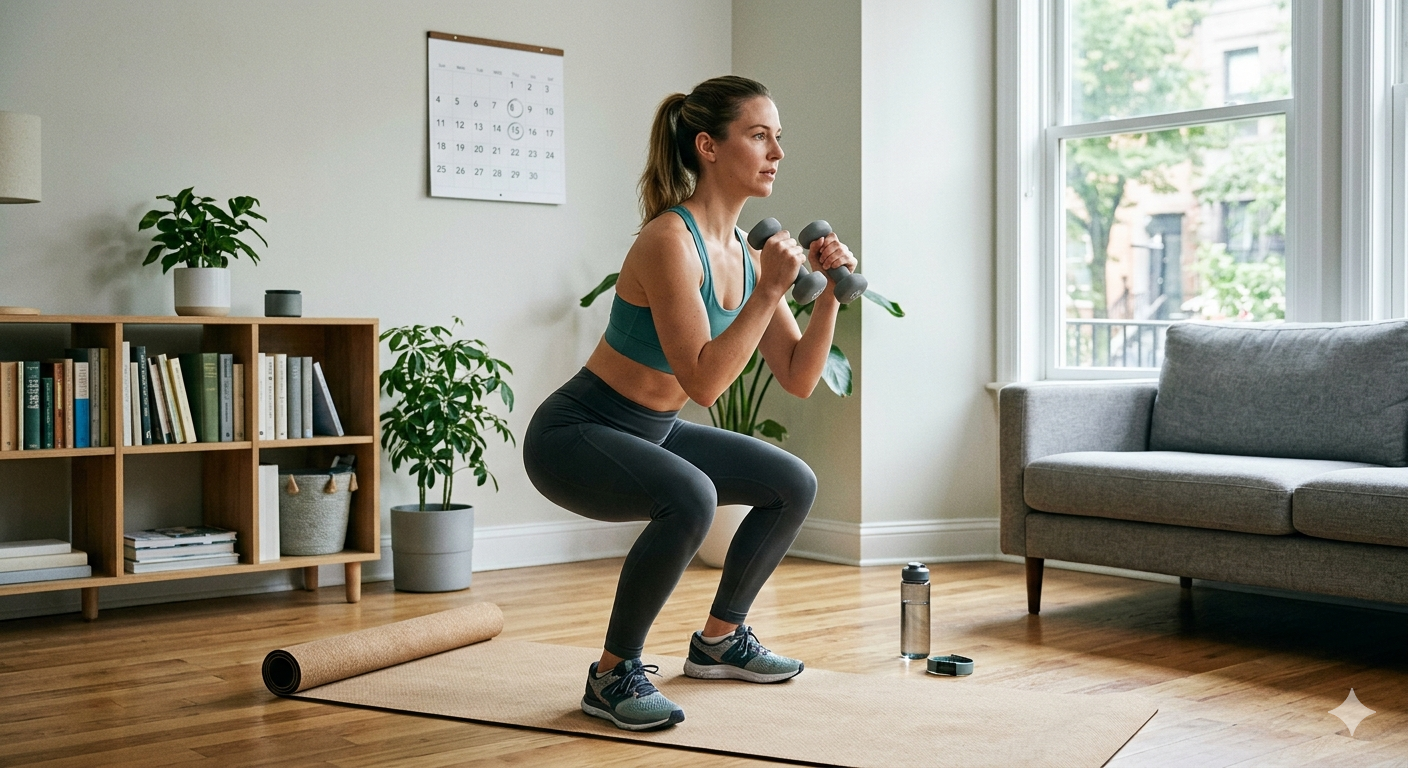
Plan for Beginners Home
Complete Home Training Setup
No gym? No problem. Here’s everything you need to start training at home.
Minimal Equipment Needed:
- Pull-up bar (doorway or wall-mounted)
- Resistance bands (optional but helpful)
- Yoga mat for comfort
- Sturdy chair or bench
Beginner Home Workout Routine:
3x Per Week Full Body
Workout A:
- Wall push-ups: 3 sets of 10-15 reps
- Table rows: 3 sets of 8-12 reps
- Squats: 3 sets of 15 reps
- Plank: 3 sets of 20-30 seconds
Workout B:
- Incline push-ups: 3 sets of 8-12 reps
- Assisted pull-ups (using chair): 3 sets of 5-8 reps
- Lunges: 3 sets of 10 reps per leg
- Dead bug: 3 sets of 10 reps per side
Tips for Home Training:
- Clear adequate space
- Use furniture creatively
- Film yourself to check form
- Progress at your own pace
Best Weekly Calisthenics Routine
The Optimal Training Template
Based on science and proven results, here’s the best approach for most people:
The 3-Day Split (Recommended for Most)
Monday: Push & Core
- Push-ups: 4 sets to failure
- Dips: 3 sets of 8-12 reps
- Pike push-ups: 3 sets of 8-10 reps
- Plank variations: 3 sets of 45 seconds
Wednesday: Pull & Core
- Pull-ups: 4 sets to failure
- Chin-ups: 3 sets of 6-10 reps
- Body rows: 3 sets of 12-15 reps
- Hanging knee raises: 3 sets of 10-15 reps
Friday: Full Body & Conditioning
- Squats: 4 sets of 20 reps
- Push-ups: 3 sets of 15 reps
- Pull-ups: 3 sets of 8 reps
- Burpees: 3 sets of 10 reps
- Mountain climbers: 3 sets of 20 reps
Why This Works:
- Adequate recovery between sessions
- Balanced muscle development
- Sustainable long-term
- Flexible for busy schedules
best weekly calisthenics routine
No equipment Calisthenics Workout—20 minutes
Frequently Asked Questions (FAQ)
Q: How long should each calisthenics workout last? A: Most effective calisthenics sessions last 45-60 minutes, including warm-up and cool-down. Beginners might start with 30-minute sessions and gradually increase duration.
Q: Can I build muscle with just calisthenics? A: Yes! Calisthenics can effectively build muscle mass through progressive overload. Focus on harder variations, slower tempos, and achieving failure in the 8-12 rep range.
Q: How many days per week should I train? A: Beginners should train 3 days per week, intermediates 4-5 days, and advanced athletes can train 5-6 days with proper programming and recovery.
Q: Do I need any equipment for calisthenics? A: While you can start with bodyweight only, a pull-up bar is highly recommended for complete upper body development. Resistance bands and parallettes are helpful but optional.
Q: How long before I see results? A: Beginners typically notice strength improvements within 2-3 weeks and visible physical changes within 6-8 weeks with consistent training and proper nutrition.
Q: Is calisthenics good for weight loss? A: Yes! Calisthenics burns calories, builds muscle (which increases metabolism), and can be structured as high-intensity circuits for maximum fat loss.
Q: Should I do calisthenics every day? A: No. Muscles need recovery time to grow stronger. Rest days are crucial. Follow a structured program with adequate rest between training sessions.
Q: What should I eat for calisthenics training? A: Focus on adequate protein (1.6-2.2g per kg bodyweight), complex carbohydrates for energy, and healthy fats. Stay hydrated and eat in alignment with your goals (muscle gain or fat loss).
Q: Can I combine calisthenics with weight training? A: Absolutely! Many athletes combine both for comprehensive fitness. Just manage total training volume to avoid overtraining.
Q: How do I progress when exercises become too easy? A: Progress by increasing reps, slowing down tempo, using harder variations, reducing rest time, or adding isometric holds.
Q: Is calisthenics suitable for older adults? A: Yes, with appropriate modifications. Calisthenics can improve functional strength, balance, and mobility. Consult a healthcare provider before starting any new exercise program.
Q: What’s the difference between calisthenics and regular gym training? A: Calisthenics uses bodyweight as resistance and emphasizes functional movement patterns, while gym training typically uses external weights. Both are effective for building strength and muscle.
Conclusion
Calisthenics offers a sustainable, effective, and accessible path to fitness. Whether you’re just starting with a beginner home plan or progressing toward advanced skills, consistency and proper programming are key. Choose the workout structure that fits your schedule, start where you are, and progress systematically.
Remember: The best workout plan is the one you’ll actually stick to. Start today, stay consistent, and watch your strength and physique transform.

Faisal is the founder and content creator of The Workout Haven, a fitness and wellness blog focused on home workouts, weight loss, strength training, yoga, and healthy lifestyle habits. He creates easy-to-follow, beginner-friendly fitness guides backed by research, practical experience, and real-world application. Faisal’s goal is to help people stay active, build strength, and improve overall health—no gym or expensive equipment required.